Why is Alloy Steel Important in Modern Manufacturing?
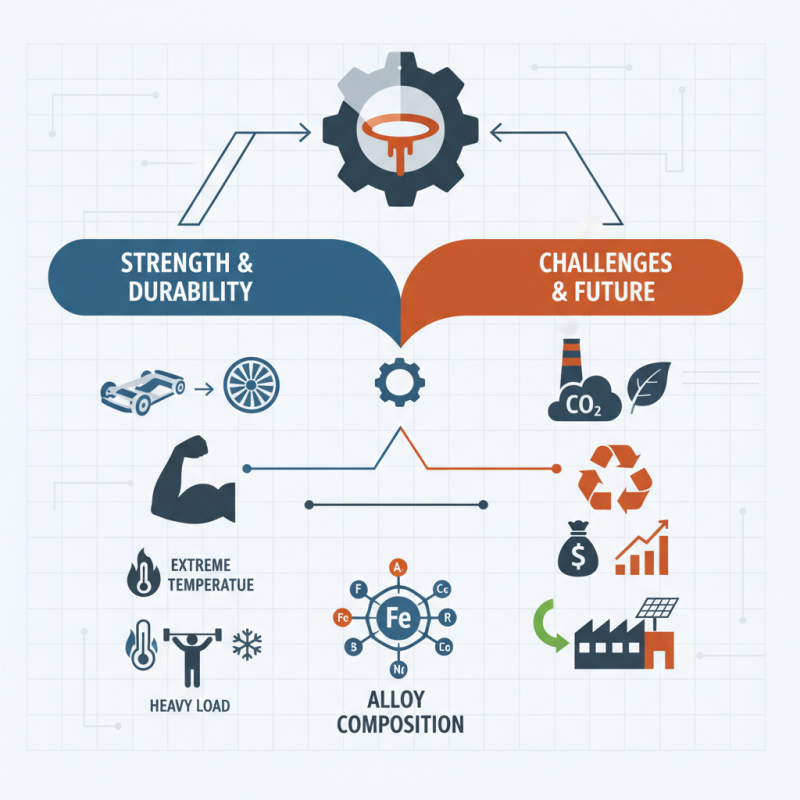
Alloy steel plays a crucial role in modern manufacturing. Its unique properties enhance strength and durability. This material combines iron with various elements. Each addition alters performance.
In industries like automotive and aerospace, alloy steel is vital. It withstands extreme conditions and heavy loads. Manufacturers rely on its versatility. This steel type can be tailored for specific applications. However, the challenge lies in balancing cost and performance.
Yet, while alloy steel offers benefits, it is not without drawbacks. Its production can be energy-intensive. The environmental impact is a concern. Companies must reflect on sustainable practices. Transitioning to greener methods is essential for the future of alloy steel.
The Role of Alloy Steel in Enhancing Mechanical Properties
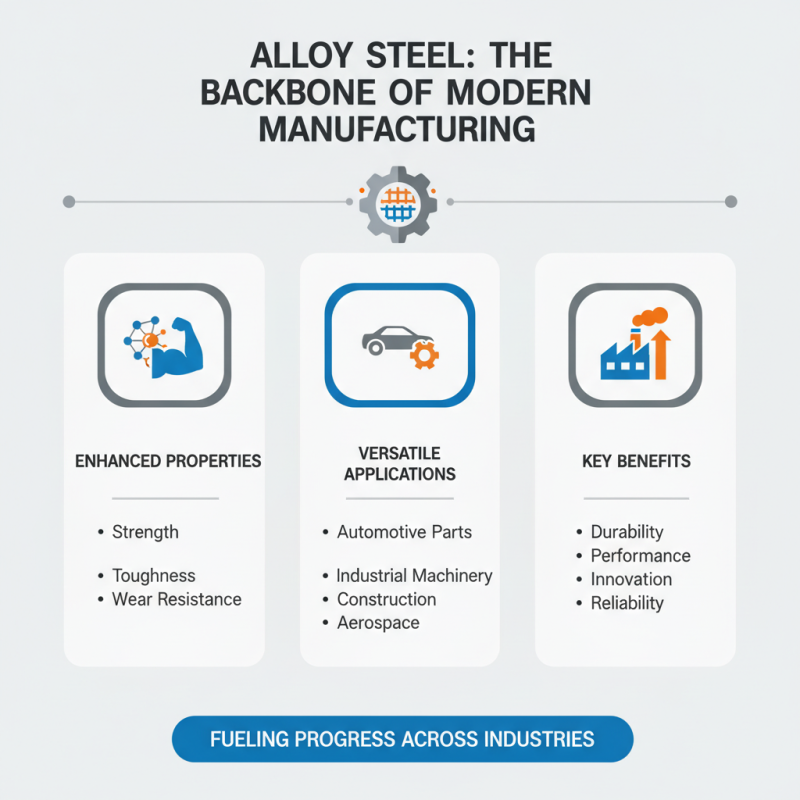
Alloy steel plays a crucial role in modern manufacturing. Its unique composition enhances mechanical properties like strength, toughness, and wear resistance. These features make alloy steel ideal for various applications, from automotive parts to industrial machinery.
The blend of different metals—like nickel, chromium, and molybdenum—provides superior attributes compared to carbon steel. This synergy leads to materials that can handle extreme conditions. For instance, alloy steel can withstand high temperatures, making it suitable for engine components. However, not all alloy steels are created equal. Choosing the wrong type can lead to failure in demanding environments.
**Tip:** When selecting alloy steel, consider the specific application. Each type has unique properties. Always analyze the environment where the material will be used.
Manufacturers often overlook the importance of proper heat treatment. Improper techniques can undermine the benefits of alloy steel. This step should not be neglected. Control over the heating and cooling process is essential to achieving desired characteristics.
**Tip:** Document your heat treatment processes. Monitoring can help you identify issues early. This commitment can improve your production consistency over time.
Key Industries Utilizing Alloy Steel for Advanced Applications
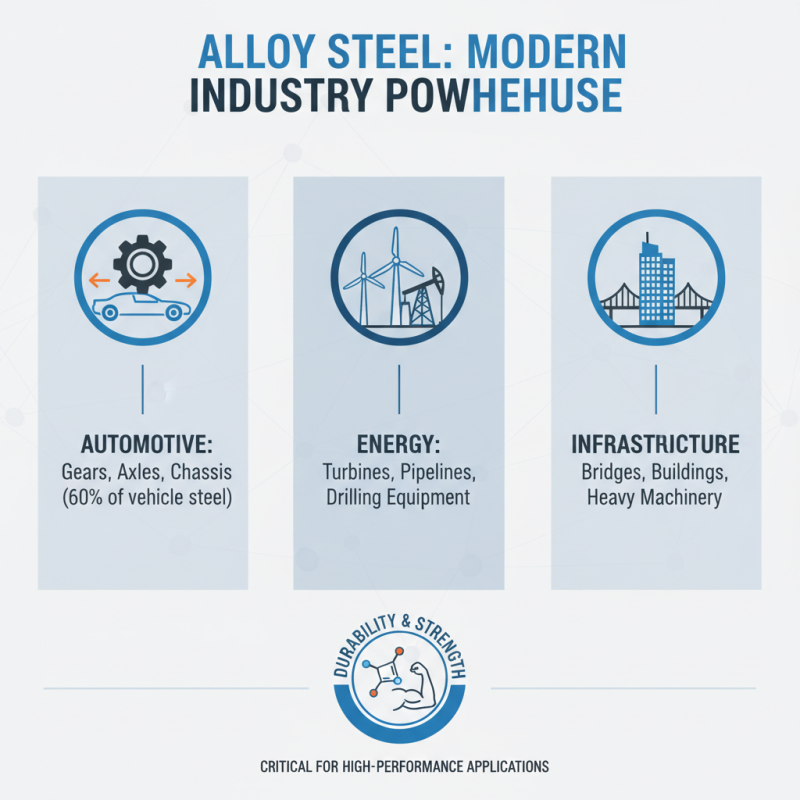
Alloy steel plays a crucial role in several key industries today. Its unique properties make it ideal for applications requiring durability and strength. The automotive industry, for example, leverages alloy steel for critical components like gears and axles. According to a report by the American Iron and Steel Institute, approximately 60% of the steel used in vehicles is alloy steel, underscoring its significance.
In the aerospace sector, lightweight yet strong materials are essential. Alloy steel's ability to withstand high stress and extreme temperatures makes it a vital material for aircraft components. Reports indicate that alloy steels are found in about 70% of airframes and engines today. However, sourcing and processing these materials can be challenging. Supply chain issues often arise, affecting production timelines and costs.
The construction industry also benefits from alloy steel. Structural components, such as beams and reinforcements, rely on alloy steel to ensure stability. Data shows that construction projects using alloy steel can reduce their material costs by 15%. Nonetheless, the environmental impact of alloy production is a growing concern. The industry must address sustainability while meeting rising demands.
Statistical Trends in Alloy Steel Production and Consumption
Alloy steel is a vital component in modern manufacturing. Recent statistics show significant increases in its production and consumption. According to industry reports, global demand for alloy steel has risen sharply over the past decade. This growth reflects its importance in various sectors, including automotive and construction.
Tip: To maximize efficiency, keep track of alloy steel suppliers. Check their production capabilities regularly. Understanding trends helps you make informed choices.
Countries rich in resources have ramped up alloy steel production. This surge leads to enhanced quality but sometimes raises costs. It's essential to balance quality with price. Too often, businesses overlook budget considerations while focusing on strong materials.
Tip: Regularly review your alloy steel needs. Consider switching suppliers if prices increase. Staying adaptable can prevent overspending.
Comparative Analysis of Alloy Steel vs. Carbon Steel in Manufacturing
Alloy steel and carbon steel play critical roles in manufacturing. Alloy steel is made by combining carbon steel with other elements. This blend improves strength, toughness, and resistance to wear. According to a recent report by the International Steel Association, alloy steels can outperform carbon steels in various applications. This is particularly true in automotive and aerospace sectors.
In terms of strength, alloy steels can exhibit tensile strength exceeding 200,000 psi. Carbon steels, on the other hand, typically range from 30,000 to 60,000 psi. This significant difference translates into better performance in high-stress environments. However, there are concerns regarding cost. Alloy steel can be more expensive due to its complex production process. A study from the Metalworking Industry Reports shows that manufacturers sometimes overlook these costs.
Moreover, the welding properties of alloy steel require careful consideration. Improper welding can lead to defects, affecting structural integrity. Carbon steel is more forgiving in this aspect. Manufacturers must factor in these variables when choosing the right material. The decision should not just be based on data, but also on practical applications and potential drawbacks.
The Future of Alloy Steel: Innovations and Sustainability in Production
The future of alloy steel lies in its innovative production methods. Manufacturers are now focusing on reducing waste. Traditional processes often generated excess materials. New techniques, like additive manufacturing, minimize this waste significantly. These changes can lower costs and environmental impact.
Sustainability plays a crucial role in alloy steel production. Companies are investing in recycling scrap metal. This approach not only saves resources but also reduces energy consumption. Innovations in alloy compositions are emerging as well. Manufacturers are exploring lighter and stronger materials. These advancements support a greener production chain.
However, challenges still exist. Many manufacturers struggle with the transition to sustainable practices. There can be resistance to change within established systems. Training employees on new methods can be difficult. Nonetheless, these obstacles provide opportunities for growth and improvement in the sector.
Importance of Alloy Steel in Modern Manufacturing
Alloy steel is crucial in various manufacturing sectors due to its durability and versatility. This chart illustrates the market share percentage of alloy steel applications across five key industries, highlighting its importance in modern production methods.