What Is the Best Stainless Steel Pipe Supplier in China?
Choosing the best Stainless Steel Pipe supplier in China is not a price-only decision. A low quotation can look attractive, but buyers also need consistent chemistry, accurate dimensions, dependable lead times, and clear documentation. Ask how the supplier controls production, inspects finished pipes, and handles nonconforming material. Request sample test certificates and confirm that grade, size, wall thickness, and finish match your specification.
Materials scientist and author William D. Callister Jr. wrote, “The properties of a material are determined by its structure.” That principle matters when comparing suppliers. Two pipes may look identical on a warehouse rack, yet differ in composition, processing, or quality controls. Review mill test certificates, inspection records, and traceability details. If a claim is vague, ask for evidence. A good supplier should explain its process plainly.
Look beyond polished catalogs. Check whether the company can provide consistent batches, suitable packaging, and responsive technical support. Ask about export experience and how it protects pipe ends during shipment; dents and contamination can create real problems on arrival. Price still matters. It just should not carry the whole decision. Even careful sourcing has limits, and no checklist guarantees a perfect order. Compare several qualified suppliers, verify details in writing, and judge their answers as carefully as their quotations. A reliable choice is the one that can show what it makes, how it checks quality, and what happens when something goes wrong.
What Defines the Best Stainless Steel Pipe Supplier in China?
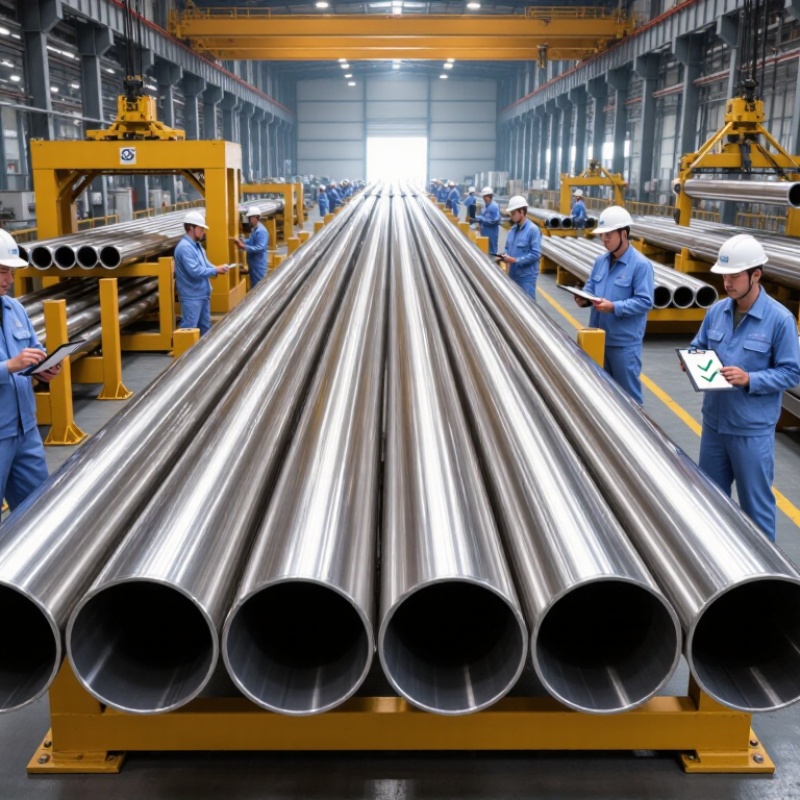
The best stainless steel pipe supplier in China is defined by more than price or a polished catalogue. Look for clear answers about steel grades, dimensions, wall thickness, and the intended service environment. A pipe for food processing may need different surface and cleanliness controls than one used outdoors. Details matter. Ask how the supplier checks ovality, weld quality, and surface finish, and whether inspection records match the actual order.
Reliable documentation is essential. Request material test certificates, heat numbers, and traceability from production through packing. A capable supplier should explain applicable standards without making vague promises, and should identify testing methods and tolerances before production begins. Check whether sample measurements agree with the specification; a small mismatch can cause trouble during installation. That takes discipline. Communication is another practical test: responses should address technical questions directly, including lead times, packaging, and how defects are handled. A low quote can hide exclusions, so compare the full specification and delivery terms. I would not judge a supplier by one successful sample alone. Ask how routine inspections are recorded, and verify that the same controls apply to the shipment. No supplier is perfect, but a trustworthy one makes its limits and evidence clear.
Overview of China’s Stainless Steel Pipe Supply Market
Overview of China’s Stainless Steel Pipe Supply Market
China’s stainless steel pipe supply market is broad, but not uniform. It includes large production facilities, regional processors, stockists, and export-focused trading companies. Their capabilities differ in pipe dimensions, manufacturing routes, surface finishes, and order volumes. Some handle custom specifications; others focus on standard sizes kept in inventory. Details matter.
A buyer comparing suppliers should look beyond price and catalogue photos. Ask whether the pipe is welded or seamless, then confirm its grade, outside diameter, wall thickness, and tolerances. Request current inspection records and traceability documents for the actual order, not just a sample file. For demanding applications, independent testing or pre-shipment inspection can reduce uncertainty. Still, checks cost time.
Export readiness varies, too. Confirm packing methods, product marking, production lead time, and freight responsibilities before placing an order. A polished website does not prove a supplier can meet a short deadline or unusual dimensions. A smaller processor may offer useful flexibility, though its documentation deserves closer review. Published capacity and delivery estimates can change with material availability, so comparisons are not always straightforward.
Key Product Quality Standards and Certifications
Choosing the best stainless steel pipe supplier in China starts with verifiable quality controls, not a polished catalogue.
The 2023 worldstainless report recorded 58.4 million tonnes of global stainless steel production. That scale makes traceability important: ask suppliers to link each pipe bundle to its heat number and material test certificate. ASTM A312 covers seamless, welded, and heavily cold-worked austenitic stainless steel pipes. For documented inspection results, request an EN 10204 Type 3.1 certificate and confirm its chemistry and mechanical values match the order. A certificate is useful, but it is not the pipe itself.
Check how the supplier verifies dimensions, surface condition, and weld quality. For example, request sample inspection records, hydrostatic test results where applicable, and positive material identification records for critical projects. ISO 9001 certification indicates a quality management system; it does not certify every pipe or guarantee compliance with a project specification. Compare the certificate scope, issuing body, and expiry date. Then check whether the actual production site is covered. Small paperwork gaps happen, and they deserve follow-up.
Tips: Specify grade, dimensions, tolerance, test method, and applicable standard in the purchase order. Ask for a sample report before production, then verify markings on delivery. If traceability stops at the mill certificate, pause and ask why.
How to Compare Suppliers’ Capabilities and Services
Comparing stainless steel pipe suppliers takes more than checking a product list. Ask which grades, outside diameters, wall thicknesses, and lengths they can supply consistently. A capable supplier should explain tolerances clearly and provide material test reports linked to identifiable pipe batches. Request a sample report and check that its heat number matches the marking on the pipe. Small details matter.
Production capacity is only part of the picture. Ask whether the supplier handles cutting, end preparation, protective caps, and export packing in-house. Request realistic lead times for both standard sizes and custom orders. Then compare how clearly staff answer technical questions, especially when specifications are incomplete. A polished catalog can still hide gaps; it is not proof of reliable service. I would also ask how shortages or inspection failures are reported. Responses may be imperfect, but vague answers about traceability or corrective action deserve a closer look.
Service quality shows up after an order is placed. Confirm who coordinates inspection, shares progress updates, and prepares shipping documents. If possible, review a recent inspection record and packaging photos from a comparable shipment. Check whether agreed dimensions and surface condition are recorded before dispatch. No supplier is flawless. What matters is whether its process is visible, consistent, and easy to verify.
What Is the Best Stainless Steel Pipe Supplier in China?
Compare suppliers by the evidence they can provide for product quality, manufacturing capability, and service—not by claims alone.
How to use this chart: These example weights are a buyer-side evaluation framework, not measured market data or ratings of specific suppliers. Request relevant certificates, inspection records, traceability documents, and delivery details, then score each supplier against the same criteria.
Steps to Verify and Select a Reliable Supplier
Selecting a stainless steel pipe supplier in China starts with defining the service conditions.
Record the grade, outside diameter, wall thickness, length, end finish, and required standard before requesting quotes. Small differences matter. A pipe for a corrosive line may need a different grade from one used for general water service. Ask each supplier to confirm the specification in writing, including tolerances and testing scope.
Check traceability, not just a certificate attached to an email.
Request a material test certificate linked to heat numbers, then compare those numbers with pipe markings and packing lists. Verify chemical composition, mechanical results, dimensions, and inspection records. For an initial order, arrange an independent inspection or witness dimensional checks and surface examinations before shipment. Review sample pieces too, but remember that one sample cannot prove every batch is consistent. Ask directly.
Assess production capability.
Ask about equipment, monthly capacity, lead time, packaging, and how nonconforming products are handled. A live video walkthrough can clarify details, though it cannot replace an on-site audit when order value or risk is high. Request references for similar grades and sizes, and speak with a recent customer if possible. A polished website can still mislead. I would treat smooth sales answers as a weak point in my own review and ask the same technical question in different ways. Compare total costs, including inspection, freight, and replacement terms, rather than choosing the lowest quote.