Why Choose Nickel Alloy for Your Next Project?
In today’s manufacturing landscape, choosing the right materials is crucial. Nickel alloy has become a popular choice for various projects. Industry expert Dr. Emily Carter states, "Nickel alloy offers unmatched performance and durability for demanding applications." This insight highlights the benefits that nickel alloy brings to diverse industries.
Nickel alloys stand out for their resistance to corrosion and heat. They are often used in aerospace, chemical processing, and marine applications. The unique properties of nickel alloys make them ideal for harsh environments. However, sourcing the right alloy can be challenging. Many companies still underestimate the importance of material selection. This often leads to project delays and increased costs.
Investing in nickel alloys may seem expensive upfront. Yet, the long-term benefits often outweigh the initial costs. Superior strength and longevity ultimately save money and resources. The decision to use nickel alloy requires careful consideration and planning. Reflecting on the material's performance can lead to better outcomes. Every project should carefully evaluate the potential of nickel alloy for its requirements.
Understanding Nickel Alloys: Composition and Properties
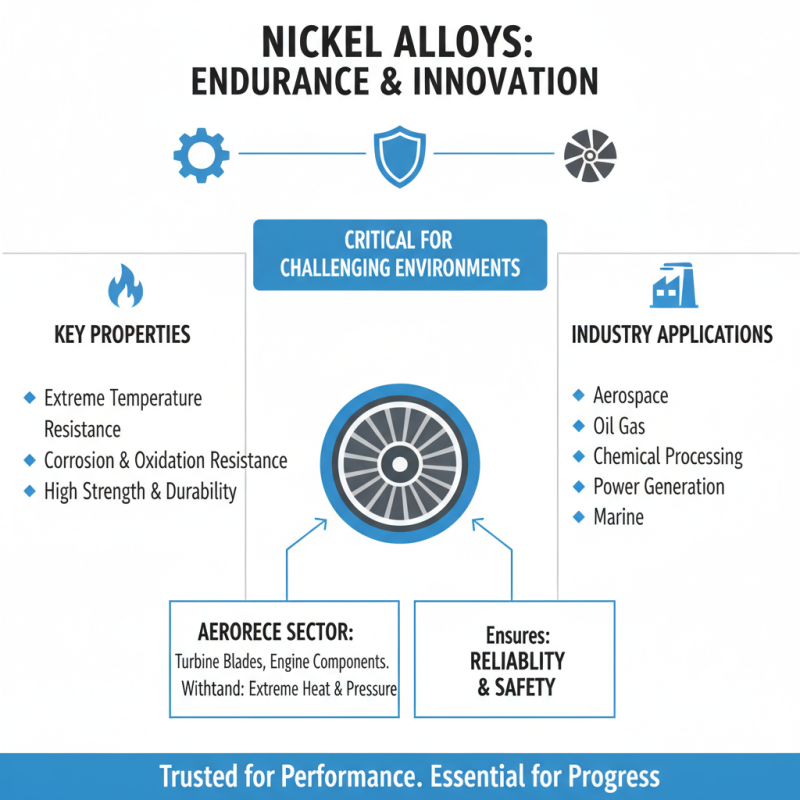
Nickel alloys are becoming increasingly popular for various applications. Their unique composition offers excellent resistance to corrosion and high-temperature environments. These properties make them suitable for industries like aerospace, chemical processing, and marine applications.
The main components of nickel alloys include nickel, copper, iron, and other metals. The combination varies depending on the intended use. For example, adding chromium enhances wear resistance. Titanium inclusion improves strength at elevated temperatures. With different formulations, each alloy has specific advantages.
Tips: When selecting a nickel alloy, consider the environment it will face. A harsher environment requires alloys with higher corrosion resistance. Also, remember that not all nickel alloys behave the same under stress. Regular testing and reflecting on performance data is vital.
While nickel alloys are beneficial, they come with challenges. They can be more expensive than other materials. It’s necessary to evaluate the long-term benefits versus initial costs. Sometimes, a more straightforward solution could be just as effective. Careful reflection on objectives can lead to better decisions.
Advantages of Nickel Alloys in High-Temperature Applications
Nickel alloys are increasingly popular in high-temperature applications due to their unique properties. These materials can withstand extreme heat without losing their structural integrity. They maintain strength even in environments where others fail. This makes them ideal for industries like aerospace and power generation.
Another advantage is their excellent resistance to oxidation and corrosion. In high-temperature conditions, oxidation can lead to catastrophic failures. Nickel alloys resist this degradation, prolonging component life. Designers appreciate this feature. It reduces maintenance costs and downtime, allowing for more efficient operations.
However, working with nickel alloys can be challenging. Their fabrication requires specialized equipment and techniques. Not all manufacturers can easily adapt. There is often a learning curve involved. Those who successfully navigate these challenges can greatly benefit from the durability and performance nickel alloys offer.
Advantages of Nickel Alloys in High-Temperature Applications
Corrosion Resistance: Why Nickel Alloys Excel in Harsh Environments
Nickel alloys are a top choice for projects demanding corrosion resistance. These materials shine in harsh environments. They withstand intense heat, pressure, and aggressive chemicals. This makes them vital in industries like oil and gas, chemical processing, and aerospace. The unique properties of nickel alloys help prevent material degradation. This means fewer failures and lower maintenance costs.
When working with nickel alloys, keep in mind a few tips. Always evaluate the specific conditions of your project. Different environments may require different alloy compositions. Additionally, consider how fabrication methods impact performance. The right welding techniques can enhance corrosion resistance.
Another point to consider is the cost. Nickel alloys can be more expensive than stainless steel. However, the long-term savings from reduced maintenance may justify the initial investment. Over time, the durability you gain can outweigh the upfront expense. Choosing the right material isn’t always straightforward. Weigh the benefits against your project’s budget and goals.
Cost-Effectiveness: Long-Term Savings with Nickel Alloys
Nickel alloys are an excellent choice for many projects, especially due to their cost-effectiveness. They often prove to be more economical over time. While the initial investment may be higher, the long-term savings are substantial. Their durability and resistance to corrosion can reduce maintenance costs significantly.
For instance, components made from nickel alloys can last far longer than those made from less robust materials. This durability means fewer replacements and less downtime, which translates to savings in labor and lost production. In environments where failure is not an option, nickel alloys shine. Projects require materials that won’t easily succumb to wear and tear.
However, some may wonder if the initial price justifies the benefits. It’s essential to analyze the specific needs of your project. Will the advantages of reduced maintenance outweigh higher upfront costs? Evaluating these aspects is critical. Nickel alloys might not be the right fit for every situation, and careful consideration will lead to better long-term decisions.
Applications of Nickel Alloys: Industries That Benefit Most
Nickel alloys are highly valued across various industries. Their unique properties make them ideal for challenging environments. For instance, the aerospace sector relies on nickel alloys for parts that withstand extreme temperatures and pressures. These alloys ensure durability and reliability, which are critical for safety.
In the chemical processing industry, nickel alloys resist corrosion better than many materials. This ability supports the production of acids and other harsh chemicals. They are often used in pipes, valves, and reactors. This choice enhances operational efficiency and reduces maintenance costs, yet it requires careful selection to avoid premature failure.
The oil and gas sector also significantly benefits from nickel alloys. They are essential in drilling and extraction equipment exposed to high stress. However, even with their strength, there can be challenges in terms of welding and fabrication. It's crucial to employ skilled labor and the right techniques to mitigate these issues. The decision to use nickel alloys must balance cost, performance, and longevity for optimal outcomes.