How to Choose the Right Carbon Steel Flange for Your Needs?
When selecting the right Carbon Steel Flange, it's crucial to consider various factors. According to industry reports, the global market for carbon steel flanges is projected to grow significantly. In 2021, the market was valued at approximately $5 billion, highlighting its importance across multiple sectors.
Expert John Smith emphasizes the complexity of choosing the correct flange: “Selecting the right Carbon Steel Flange impacts both safety and performance in industrial applications.” This statement reflects the weight of making educated choices in flanges.
The right choice can affect project costs, reliability, and safety standards. Many overlook small details, assuming all flanges are the same. However, variations in specifications can lead to failures. Understanding flange types, pressure ratings, and material grades is vital for optimal performance. Each application demands a thoughtful approach.
Understanding Carbon Steel Flanges and Their Applications
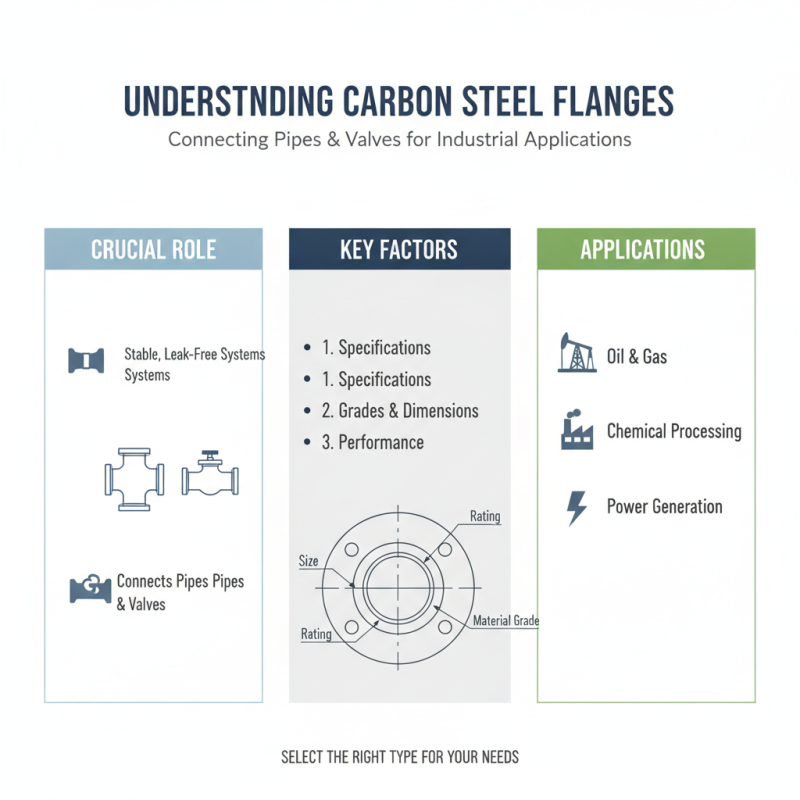
Carbon steel flanges play a crucial role in various industrial applications. They are used to connect pipes and valves, ensuring a stable and leak-free system. Understanding their specifications helps in selecting the right type for your needs. These flanges come in various grades and dimensions, which can affect performance.
Tip: When choosing a carbon steel flange, consider the pressure and temperature of your system. This can help avoid failures.
Applications of carbon steel flanges are wide-ranging. They are common in oil and gas, water treatment, and construction. Each industry may have different standards for flange specifications. This varies from the required thickness to the type of bolts used.
Tip: Always check the compatibility of the flange with the intended materials. Mismatched materials can lead to corrosion issues.
Using carbon steel flanges has its challenges. The material can be prone to rust if not properly treated. Regular maintenance inspections are essential to ensure longevity. It’s crucial to understand the environment where the flanges will be used. High humidity or exposure to chemicals can alter their lifespan.
Assessing the Required Specifications for Your Project
Choosing the right carbon steel flange involves careful consideration of specifications. Projects can vary greatly, requiring different types of flanges. Start by identifying the pressure rating needed for your project. Common ratings include 150, 300, and 600. This choice affects how well the flange will withstand pressure and temperature variations.
Next, consider the flange dimensions. The size must match your piping system accurately. Misalignment can lead to leaks or failures. Measure the outer diameter and bolt hole spacing precisely. Remember that even a slight error can result in significant issues during installation.
Also, think about the environment where the flange will be used. High humidity or corrosive chemicals can weaken carbon steel. In such situations, additional coatings or treatments may be beneficial. Reflect on your project's unique conditions and requirements. Choosing the right flange means balancing technical specifications with practical application.
How to Choose the Right Carbon Steel Flange for Your Needs?
| Specification |
Description |
Typical Uses |
Pressure Rating |
Material Type |
| ASME B16.5 |
Flanges for pipes up to 24 inches |
Oil and gas applications |
150 - 2500 psi |
Carbon Steel |
| ASME B16.47 |
Flanges for pipes 26 inches and larger |
Pipelines, heavy industry |
150 - 600 psi |
Carbon Steel |
| API 6A |
Flanges for high-pressure applications |
Oilfield services |
5000 psi and above |
Carbon Steel |
| DIN 2566 |
German standard for flanges |
General piping |
PN 6 - PN 40 |
Carbon Steel |
Evaluating Different Types of Carbon Steel Flanges
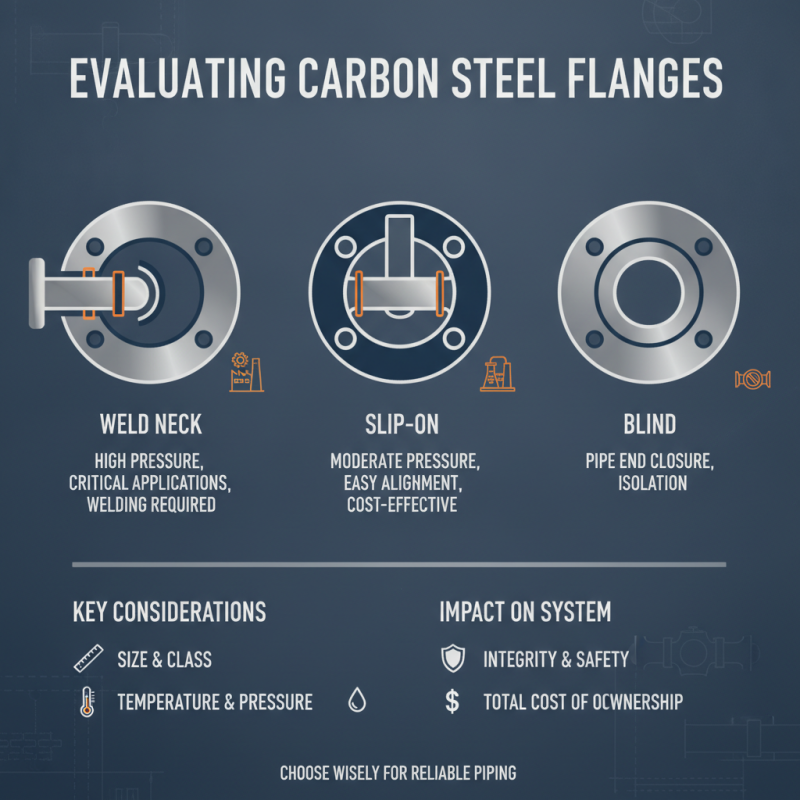
When evaluating different types of carbon steel flanges, it’s essential to consider their specific applications. Flanges come in various grades, sizes, and styles. Each type has unique properties that influence its performance in different environments. The choice can significantly affect the overall integrity of the piping system.
Weld neck flanges are popular for high-pressure applications. Their tapered design allows for a strong connection. However, they require precise welding techniques. On the other hand, blind flanges are used when a line needs to be closed. They are simpler but can be challenging to remove later. Each type has benefits worth exploring, but they also come with potential drawbacks that should not be overlooked.
Understanding the materials involved is crucial. Carbon steel flanges may rust if not treated properly. Regular maintenance is key to ensure long-lasting durability. Sometimes, upgrades to stainless steel flanges may be necessary for better resistance. It's important to reflect on the operational environment and choose a flange that fulfills both safety and efficiency needs.
Factors to Consider: Pressure Ratings, Temperature, and Corrosion Resistance
Choosing the right carbon steel flange requires careful consideration of various factors. Pressure ratings are critical. Every application has a specific limit on how much pressure a flange can withstand. Exceeding this can lead to failure. When selecting a flange, check the pressure requirements of your system. Ensure the flange matches or exceeds these values for safety and durability.
Temperature is another vital aspect. Carbon steel flanges can handle a range of temperatures, but not all applications are the same. High temperatures can weaken materials, causing potential hazards. Understand the operating temperature of your environment and select a flange rated for those conditions. The wrong choice here could lead to leaks or catastrophic failures.
Corrosion resistance is crucial when dealing with harsh environments. Carbon steel is prone to rust. If your application involves moisture or chemicals, the risk increases. Consider coatings or alloyed materials to improve resistance. Regular inspections can help assess how well the flange withstands its environment. Sometimes, it may be necessary to reassess if your current choice is adequate. Each factor plays a role in ensuring efficient and safe operations.
Selecting a Reliable Supplier for Carbon Steel Flanges
When selecting a reliable supplier for carbon steel flanges, knowledge and experience matter. Look for suppliers with a solid track record in the industry. Check their certifications and quality assurance processes. A qualified supplier will have clear standards for their products. This is crucial for long-term durability.
Communication is essential. Suppliers should be responsive and informative. Ask questions about their materials and manufacturing processes. Reliable suppliers often provide samples for testing. This can help you assess the quality before purchase. It’s vital to gauge their willingness to provide support and advice. Some suppliers may not meet your expectations in this regard.
Lastly, consider customer reviews and industry reputation. Look for feedback on their timeliness and service quality. It’s important to find a supplier who values your needs. Sometimes, initial promises may not be fulfilled. Reflecting on past experiences can guide your choice. Trust your instincts while ensuring the supplier meets your specifications.
Carbon Steel Flanges Selection Criteria
This bar chart represents the importance level of various criteria when selecting carbon steel flanges. The criteria include material quality, pressure rating, size, finish type, and supplier reliability. Each criterion is assigned an importance level based on typical considerations in the procurement process.