How to Choose the Right Seamless Steel Tube for Your Project?
Choosing the right seamless steel tube for your project is crucial. These tubes are essential in various industries, offering strength and durability. According to industry expert John Smith, "Selecting the proper seamless steel tube impacts your project's efficiency.” His insight highlights the importance of making an informed choice.
Seamless steel tubes come in various sizes and specifications. Understanding the requirements of your project is key. For example, the tube's thickness, material type, and internal pressure can heavily influence your decision. It’s important to avoid assumptions. Many overlook the significance of precise measurements and project needs.
Each project poses unique challenges. A seamless steel tube that suits one application may not work for another. Consider your project's environment and usage. You might need to re-evaluate your choices based on these factors. Mistakes in tube selection can lead to project delays and increased costs. Careful consideration is essential to avoid future complications.
Understanding the Different Types of Seamless Steel Tubes Available
When choosing seamless steel tubes, understanding the different types available is crucial. Seamless steel tubes are categorized based on their specifications and applications, making it vital to match the right type to your needs. Common types include ASTM A106 and ASTM A53, which are widely used in high-temperature and pressure applications. According to industry reports, the global seamless steel tube market is forecasted to reach $48.3 billion by 2025, emphasizing the rising demand across various sectors.
Furthermore, the manufacturing process influences quality and performance. Tubes are formed by piercing solid steel and rolling it into shape, ensuring no welded seams. This results in higher strength and durability. However, not all manufacturers maintain the same quality standards. Some might overlook important inspections, leading to potential failures in critical projects. A survey indicated that nearly 15% of seamless tubes failed quality checks due to inadequate testing methods.
Different industries utilize seamless tubes for specific purposes. For example, in the oil and gas sector, high-performance tubes are required to withstand extreme conditions. Yet, there can be a gap between industry standards and actual product delivery. This disconnect can result in misalignment with project specifications, making attention to detail essential when selecting the right type of seamless steel tube for your project.
How to Choose the Right Seamless Steel Tube for Your Project?
| Tube Type |
Material Grade |
Application |
Diameter Range (mm) |
Wall Thickness (mm) |
Pressure Rating (MPa) |
| Seamless Carbon Steel Tube |
ASTM A106 |
Oil and Gas |
20 - 50 |
2.5 - 12 |
20 - 70 |
| Seamless Stainless Steel Tube |
AISI 304 |
Food Processing |
15 - 40 |
1.5 - 8 |
10 - 30 |
| Seamless Alloy Steel Tube |
ASTM A335 |
Power Generation |
25 - 60 |
4 - 15 |
30 - 100 |
| Seamless Hydraulic Tube |
EN 10216-5 |
Hydraulic Systems |
20 - 50 |
2 - 10 |
25 - 80 |
Assessing Project Requirements: Strength, Diameter, and Wall Thickness
Choosing the right seamless steel tube is crucial for any project. Focus on three key aspects: strength, diameter, and wall thickness. Each project has unique requirements. Understanding these can lead to more effective solutions.
Strength is typically measured in yields. High-strength steel can withstand greater loads. According to industry reports, grades like ASTM A106 are popular for their robust properties. When assessing your needs, consider the maximum load the tube will bear. Clear specifications are vital.
Diameter affects flow rates and pressure. Larger diameters allow for higher fluid flow. However, they may increase weight. Balancing these factors is essential.
Tip: When in doubt, conduct simulations to test your tube's performance under various conditions.
Wall thickness adds durability and can impact weight. Thicker tubes resist deformation but may be heavier. A study shows optimal wall thickness often aligns with project standards, balancing safety and performance. It’s best to strike a balance.
Tip: Consult with industry experts for insights on best practices for wall thickness based on real-world applications.
Finding the right combination can be challenging. It often requires reevaluation. Adjustments based on testing outcomes are not uncommon. Embrace a proactive approach for better results.
Evaluating Material Properties: Corrosion Resistance and Temperature Tolerance
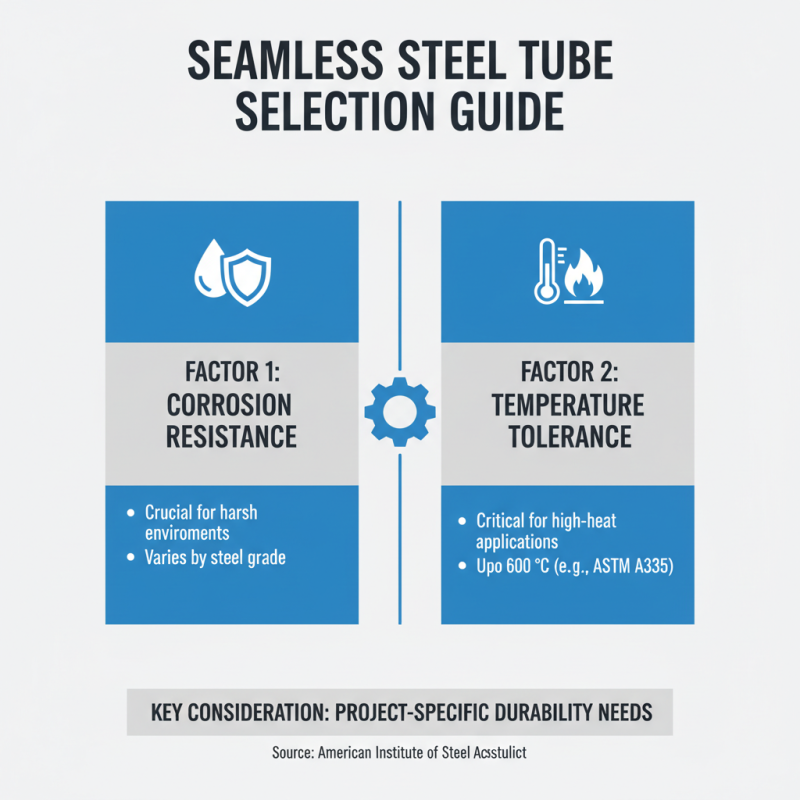
When selecting seamless steel tubes, corrosion resistance and temperature tolerance are critical. Different projects require varying levels of durability. For instance, the American Institute of Steel Construction highlights that steel grades like ASTM A335 can resist high temperatures up to 600 °C. However, these tubes might not provide optimal corrosion resistance in harsh environments.
Corrosion can drastically reduce the lifespan of seamless steel tubes. Research shows that carbon steel may only last 5-10 years in aggressive atmospheres. In contrast, alloyed tubes designed for marine applications can exhibit a lifespan over 20 years, provided the correct protective measures are taken. Despite this, even the best alloys show signs of wear if overlooked.
Temperature tolerance in steel tubes also varies significantly. Tubes used in oil and gas must endure extreme heat and pressure. Studies indicate that certain stainless steel grades withstand temperatures well, maintaining structural integrity. Yet, temperatures beyond recommended limits can lead to failures. Proper evaluations of both characteristics are vital for project success.
Determining Manufacturing Standards and Certifications for Quality Assurance
Choosing the right seamless steel tube for your project involves thorough research into manufacturing standards and certifications. Quality assurance begins with understanding the various standards applicable to steel tubes. Familiarize yourself with ISO, ASTM, and EN standards relevant to your needs. These standards assure you of the quality concerning the material, dimensions, and performance of the steel tube.
**Tip:** Always ask suppliers for documentation. Certifications validate claims about quality. They provide peace of mind that the tubes meet necessary requirements. Keep in mind that some suppliers may not be fully transparent.
Also, consider the manufacturing process. The method directly affects the steel's mechanical properties. A mix-up in processes can lead to variations in quality. Knowing whether the tubes are hot finished or cold drawn helps you tailor your choice to your project's demands.
**Tip:** Don’t hesitate to request test reports or material certifications. A reputable manufacturer should be willing to provide them. Be cautious, though; some reports may be outdated or incomplete. Always cross-check the validity of the information you receive.
Cost Considerations: Budgeting for Seamless Steel Tubes in Your Project
When budgeting for seamless steel tubes, several factors come into play. The current market trend suggests that the average cost of seamless steel pipe hovers around $1,200 to $2,500 per ton. This price range can fluctuate based on quality standards, material grades, and market demand. It's crucial to assess your project’s specific requirements carefully. Cutting costs might be tempting, but it could lead to long-term issues in construction integrity.
In addition, consider the impact of transportation and machining. Shipping costs can add another 15% to 30% to your budget. If you are sourcing tubes from distant suppliers, ensure that you account for these additional expenses. A cheaper upfront price may not provide the best value if it leads to higher logistics costs. The recent report from the World Steel Association indicates a rising demand for high-quality seamless tubes in industries like oil and gas.
Moreover, remember the importance of certifications. Tubes that meet stringent quality standards can cost 20% more but offer better reliability. If you overlook this aspect, project delays or failures may arise. Reflect on your choices and their long-term implications. While sticking to a budget is vital, ensuring the integrity of your project can save money down the road.