Top 5 Tips for Choosing the Right Stainless Steel Flange?
Choosing the right stainless steel flange can significantly impact your project’s success. Industry expert John H. Patterson, a veteran in flange manufacturing, once said, “The flange you select defines the reliability of your system.” This statement highlights the importance of a well-informed decision in selecting stainless steel flanges.
When selecting a stainless steel flange, factors such as material grade, pressure rating, and dimensions must not be overlooked. It’s crucial to remember that the right flange ensures optimal performance and safety. However, many choose flanges based solely on cost rather than specifications, leading to potential system failures.
In this ever-evolving industry, understanding the technicalities becomes essential. A stainless steel flange should match the operational demands of your application. Recognizing the importance of quality over price may seem challenging. Always question whether your choice will withstand the test of time and pressure.

Understanding Different Types of Stainless Steel Flanges
When selecting stainless steel flanges, understanding the different types can greatly improve your decision-making. Flanges come in various shapes and sizes, each serving unique applications. The most common types include slip-on, weld neck, and blind flanges. Slip-on flanges are easy to install but may not provide the highest pressure ratings. Weld neck flanges, on the other hand, are ideal for high-pressure applications due to their sturdy build.
Another crucial aspect to consider is the material grade of stainless steel. Common grades include 304 and 316. Grade 304 is widely used for general purposes, while 316 offers increased corrosion resistance, making it suitable for marine environments. Choosing the right grade is vital, as it affects durability and performance. It's essential to evaluate the specific needs of your project while taking the operating environment into account.
Balancing performance with cost can be challenging. Sometimes, opting for a less expensive flange may lead to premature failure, which is costly in the long run. Always assess the long-term implications of your choice. A thorough understanding of these different flanges ensures that your project meets safety and efficiency standards. Making an informed choice now can prevent issues down the line.
Evaluating Material Grades for Durability and Corrosion Resistance
When selecting a stainless steel flange, evaluating the material grades is crucial for ensuring durability and corrosion resistance. Different grades offer various properties. For instance, 304 stainless steel is commonly used due to its good corrosion resistance. However, it may not withstand harsh environments as effectively as 316. The choice of grade can greatly impact the flange's lifespan.
Consider the specific conditions your flange will face. Will it be exposed to chemicals or extreme temperatures? If so, using a higher-grade stainless steel, such as 316L, may be beneficial. This grade contains molybdenum, enhancing its resistance to pitting and crevice corrosion. However, it’s essential to understand that higher grades come at an increased cost. Weighing the investment against potential long-term benefits is a vital consideration.
Keep in mind that not all applications require the highest grades. Sometimes, using a lower grade can suffice, especially in less corrosive environments. Analyzing your needs carefully ensures you make an informed choice. Evaluating the environment where the flange will operate is paramount. Reflecting on the specific requirements will guide you towards the right decision.
Top 5 Tips for Choosing the Right Stainless Steel Flange
| Tip |
Material Grade |
Durability |
Corrosion Resistance |
Typical Applications |
| Evaluate Material Grades |
304 |
Moderate |
Good |
Food Processing |
| Check for Specifications |
316 |
High |
Excellent |
Marine Applications |
| Consider Environmental Factors |
Duplex 2205 |
Very High |
Superior |
Oil & Gas Industry |
| Analyze Pressure Ratings |
253MA |
High |
Good |
Power Generation |
| Select the Right Size |
430 |
Moderate |
Fair |
Automotive Exhaust |
Assessing Size and Pressure Ratings for Proper Fit
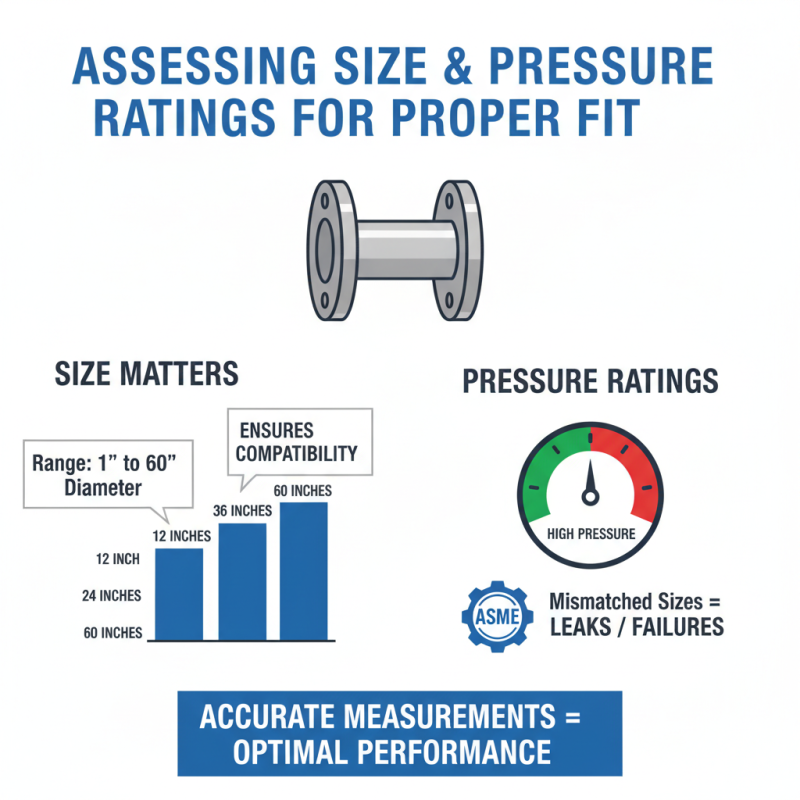
When selecting the right stainless steel flange, assessing size and pressure ratings is crucial. Flanges come in various sizes, typically ranging from 1 inch to 60 inches in diameter. Understanding this range ensures compatibility with piping systems. According to the American Society of Mechanical Engineers (ASME), mismatched sizes can lead to leaks or failures. Accurate measurements are essential for optimal performance.
Pressure ratings, indicated by class designations, dictate how much pressure a flange can withstand. Common ratings include Class 150, 300, and 600. Each class represents a specific pressure tolerance, impacting safety and durability. For instance, Class 600 flanges are built for high-stress environments, making them ideal for heavy-duty applications. Inadequate pressure ratings may cause flanges to fail under operational conditions.
Users often neglect these factors, leading to costly mistakes. It's vital to evaluate both size and pressure ratings diligently. Ignoring these criteria can compromise system integrity. A thorough review helps avoid potential operational issues and enhances reliability. Understanding stainless steel flange specifications significantly impacts overall system efficiency.
Considering Joint Design and Application Requirements
When selecting stainless steel flanges, joint design and application requirements play crucial roles. The shape, size, and purpose of the joint greatly influence the flange choice. For instance, flanges meant for high-pressure applications typically need thicker materials. A study by the American Society of Mechanical Engineers indicates that nearly 70% of joint failures are linked to incorrect flange selection.
Temperature and pressure are critical parameters. Stainless steel flanges need to withstand varying stresses. According to a report from the International Stainless Steel Forum, using appropriate grades can significantly minimize corrosion risks. For example, using austenitic stainless steel in corrosive environments enhances longevity.
The joint's configuration should also align with the application. Different designs, like gasket and bolt types, must be compatible with flange specifications. Often, engineers overlook the complexity of these requirements. This oversight can lead to assemblies that do not function as intended, sometimes even jeopardizing overall safety. Understanding these nuances is essential to ensure the integrity of the system.
Top 5 Factors to Consider When Choosing Stainless Steel Flanges
This chart illustrates the top five factors that should be considered when selecting stainless steel flanges. Each factor is rated on its importance level from 1 to 10, reflecting the critical aspects that influence flange selection based on joint design and application requirements.
Researching Manufacturer Reputation and Standards Compliance
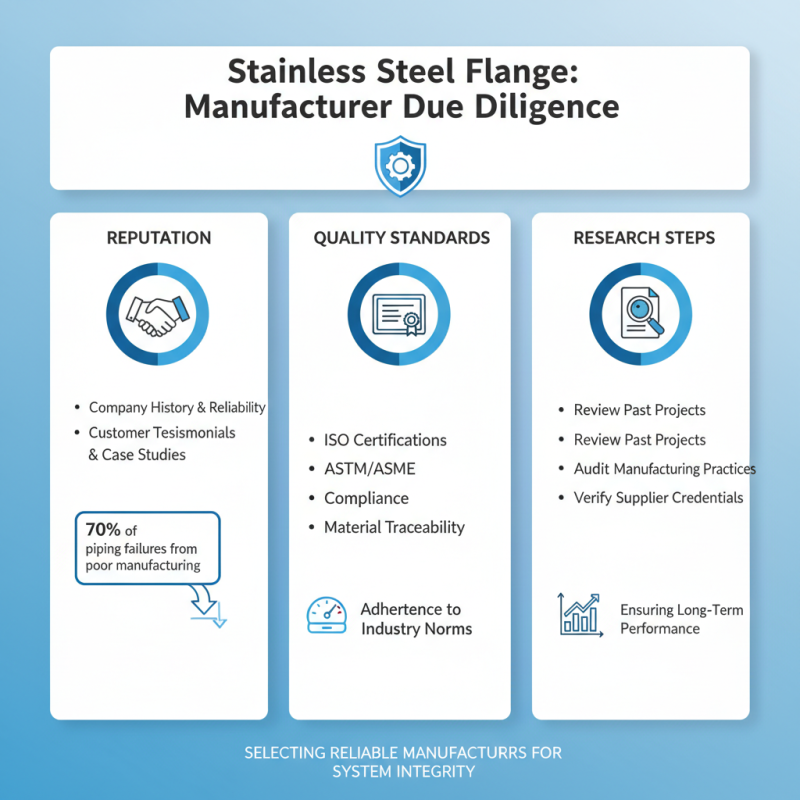
When selecting stainless steel flanges, one crucial factor is the manufacturer’s reputation. A company's history can reveal its reliability and quality standards. According to industry reports, over 70% of failures in piping systems trace back to inadequate manufacturing practices. Researching past projects and seeking customer testimonials can provide insights.
Compliance with industry standards is equally significant. Compliance ensures that flanges meet safety and performance benchmarks. The American Society for Testing and Materials (ASTM) sets rigorous standards for materials. Manufacturers that adhere to these standards typically have a better track record. In fact, a survey indicated that 65% of equipment failures relate to non-compliant products.
Additionally, understanding the manufacturing process is vital. Companies using advanced techniques, like automated welding and rigorous quality control, tend to produce better products. However, not all manufacturers disclose their methods clearly. This lack of transparency can lead to misinformed choices. Ultimately, knowing whom to trust in the stainless steel flange market requires diligent research and attention to detail.