What is Seamless Steel Pipe and Its Applications?
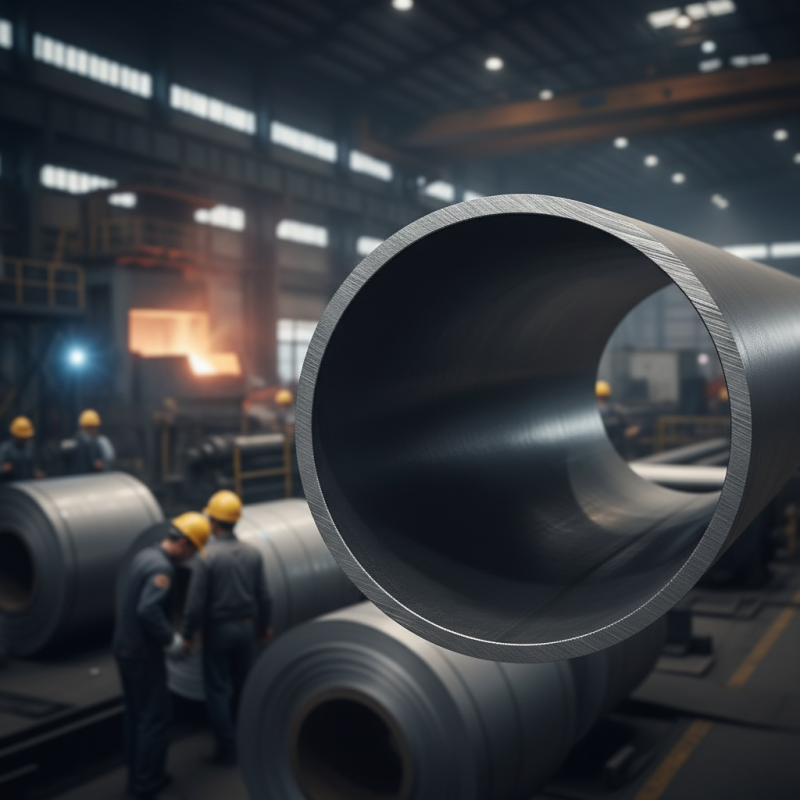
Seamless Steel Pipe plays a crucial role in various industries. It is known for its strength and durability. These pipes have no welded seams, making them reliable for high-pressure applications.
The production process of Seamless Steel Pipe is complex. It requires precise manufacturing techniques. This ensures that the pipes meet stringent quality standards. Their design allows for better resistance to pressure and corrosion.
Many sectors utilize Seamless Steel Pipe. The oil and gas industry heavily relies on it. Construction and automotive industries also use these pipes frequently. However, the production can be costly. This raises questions about sustainability and efficiency in manufacturing. It's essential to continually assess and improve these processes.
What is Seamless Steel Pipe?
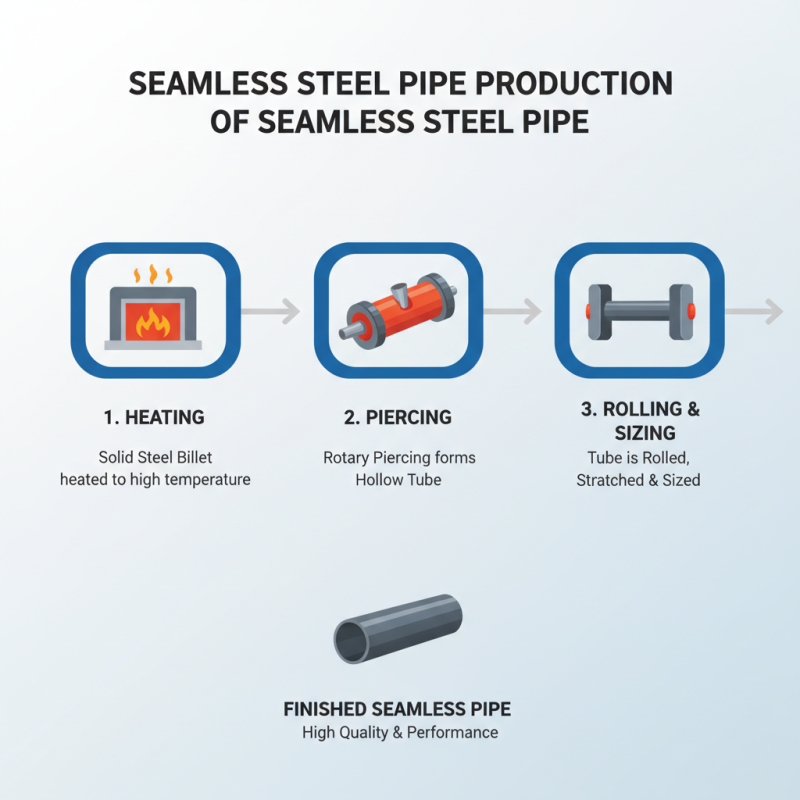
Seamless steel pipe is a type of piping manufactured without any weld seams. This production method involves a solid round steel billet, which is heated and then pushed or pulled through a die to form a hollow tube. The result is a pipe that is strong and durable. The absence of seams reduces the risk of leaks and weaknesses. This is particularly important in high-pressure applications.
Seamless steel pipes find their uses in various industries. They are widely used in the oil and gas sector, where reliability is crucial. In construction, they contribute to structures requiring robust materials. The automotive industry also utilizes these pipes for exhaust systems and other components. However, some companies might overlook the importance of using the right grades of steel. This can lead to failures or subpar performance.
While seamless steel pipes are praised for their strength, they also come with challenges. The production process is more complex, leading to higher costs. Additionally, sourcing quality raw materials can sometimes be problematic. Companies must balance cost with quality, which is not always easy. Consequently, careful consideration is essential to ensure the best outcomes in projects.
Seamless Steel Pipe Production and Application Overview
Manufacturing Process of Seamless Steel Pipe
Seamless steel pipes are crucial in various industries. The manufacturing process is essential in determining the pipe's quality and performance. The process starts with solid steel billets. These billets are heated and then pierced to form a hollow tube.
After piercing, the tube undergoes elongation. This increases its length while reducing its diameter. Finally, a series of thermal treatments refine the pipe's mechanical properties. Industry reports indicate that the yield strength can increase significantly through proper heat treatment.
**Tip:** Pay attention to the heating temperature; too high can lead to defects.
Another important stage is the finishing process. Any imperfections must be eliminated. This includes seams, scratches, and surface imperfections. The finishing ensures the pipe can withstand high pressures and extreme conditions.
**Tip:** Regular quality checks during manufacturing are vital. They prevent costly errors.
Despite advanced technology, some flaws occur. There might be inconsistencies in the wall thickness or curvature. These issues can affect performance. Assessing manufacturing methods regularly helps improve overall quality.
Key Properties and Advantages of Seamless Steel Pipe
Seamless steel pipes are crucial in various industries. They are manufactured without seams or welds, offering high pressure and high-temperature resistance.
As per industry reports, seamless pipes can handle up to 20% more pressure than welded counterparts. This makes them ideal for oil and gas applications, where strength is vital.
One key advantage of seamless steel pipe is its ability to withstand extreme conditions. For instance, they are often used in power plant piping systems. The average lifespan of seamless pipes in these environments is 10-15 years, depending on maintenance practices. However, not all seamless pipes meet the required standards. Some variations in production can lead to weaknesses, which is a concern.
The corrosion resistance of seamless steel often varies. Many assume it is uniformly high, but different alloys yield different results.
Reports indicate that carbon steel, commonly used, may not always perform well in corrosive environments. Regular inspections and proper material selection become essential in such cases. This highlights the importance of informed decision-making when choosing seamless steel pipes for critical applications.
Common Applications of Seamless Steel Pipe in Various Industries
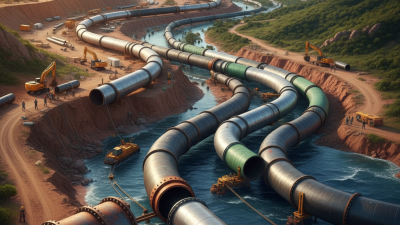
Seamless steel pipes are versatile and vital in various industries. They are known for their strength and reliability. This makes them ideal for high-pressure and high-temperature applications. One common use is in the oil and gas sector, where they transport hydrocarbons from extraction sites. Their integrity under extreme conditions is crucial for safety and efficiency.
In construction, seamless steel pipes support structural frameworks and plumbing systems. Their durability reduces the frequency of repairs. In the automotive industry, they are used in manufacturing exhaust systems and fuel lines. Using seamless pipes minimizes the risk of leaks and failures, which can have significant consequences.
However, not all applications may benefit fully from seamless pipes. Their production can be expensive and time-consuming. This may lead some companies to overlook them in favor of welded alternatives. It’s vital to weigh the pros and cons carefully. Understanding each application’s unique demands can reveal the best choice of materials.
Comparison with Welded Steel Pipe: Advantages and Disadvantages
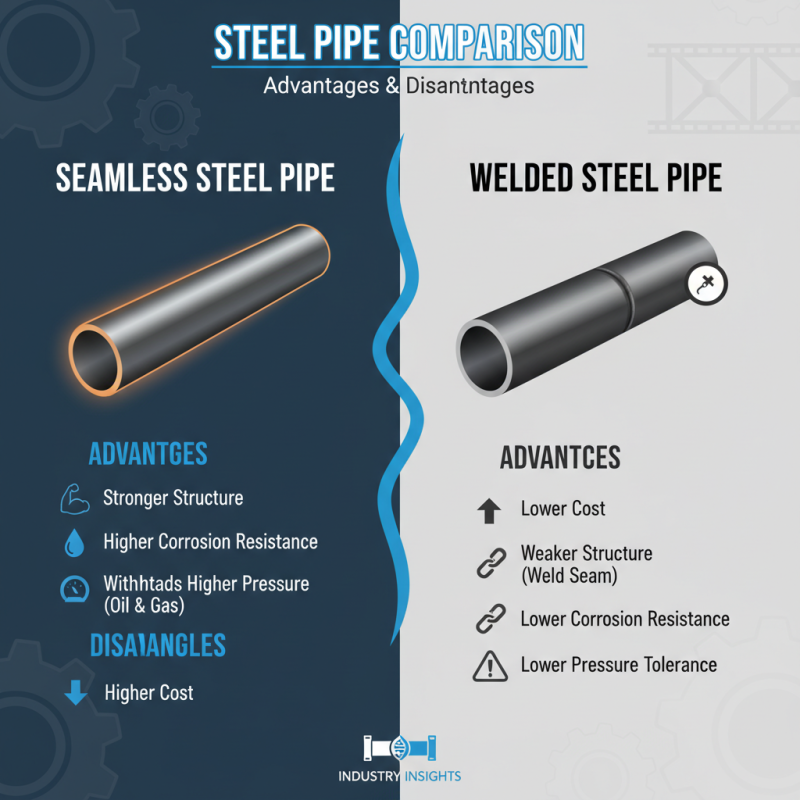
Seamless steel pipes are widely used in various industries due to their manufacturing process. They are made from solid steel billets, which are heated and then formed into pipes without any seams. This gives them a uniform structure and makes them stronger compared to welded pipes. According to industry reports, seamless pipes have a higher corrosion resistance than welded ones. They also withstand higher pressures, making them ideal for critical applications like oil and gas transportation.
However, seamless steel pipes come with higher manufacturing costs. The production process is more complex. This leads to a higher price point in comparison to welded pipes. Welded steel pipes are easier to produce. They are suitable for lower pressure applications and require less material. Data shows that welded pipes can be produced in larger diameters more efficiently. This is a strong point for projects with less demanding specifications.
In terms of flexibility, welded pipes outperform seamless variants. They can be made to specific lengths and diameters quickly. Yet, the risk of defects in the weld can be a downside. The welding process may introduce weaknesses. This can lead to failures under excessive loads. Companies must weigh these trade-offs based on project requirements and cost constraints.