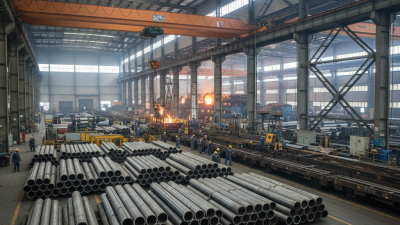
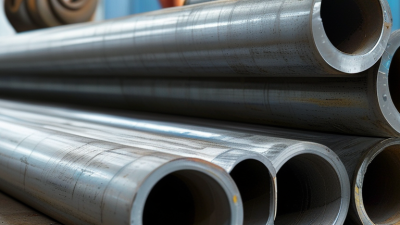
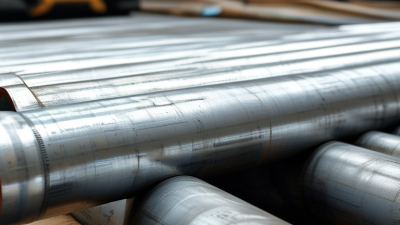
Why Choose Seamless Steel Tube for Global Projects?
Why Choose Seamless Steel Tube for Global Projects?
Global projects demand more than impressive specifications. They require materials that perform under pressure, temperature changes, vibration, and long transport routes. Seamless Steel Tube is often selected because it has no welded seam along its length. This structure can reduce potential weak points in demanding applications, including energy, chemical processing, construction, and heavy machinery.
Professor Harry Bhadeshia, a respected metallurgist, states, “Steel is a material of enormous complexity.” His observation is important here. Tube performance depends on more than appearance or nominal strength. Steel grade, heat treatment, wall thickness, dimensional accuracy, and manufacturing control all influence service reliability. A tube that looks flawless under warehouse lighting may still fail to meet project requirements. That is why experienced engineers review mill certificates, chemical composition, mechanical test results, and inspection records before approval.
Traceability matters. So does consistency.
In international projects, seamless products can simplify engineering decisions when high pressure or demanding operating conditions are involved. Their continuous construction may support dependable performance in pipelines, boilers, hydraulic systems, and structural assemblies. However, Seamless Steel Tube is not automatically the best choice for every project. It can cost more, and certain welded tubes may offer practical advantages for lower-pressure or large-diameter applications. This point is sometimes overlooked.
A reliable selection process compares pressure, temperature, corrosion exposure, installation conditions, standards, and total lifecycle cost. Independent inspection can add confidence, especially when suppliers, mills, and contractors operate across different regions. The strongest decision is rarely based on marketing language alone. It comes from evidence, qualified professionals, and a willingness to question convenient assumptions.
What Is Seamless Steel Tube?
Why Choose Seamless Steel Tube for Global Projects?
What Is Seamless Steel Tube?
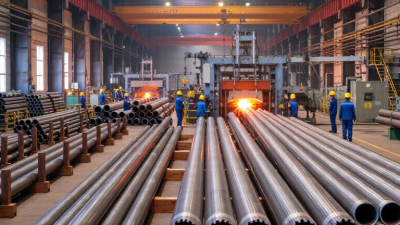
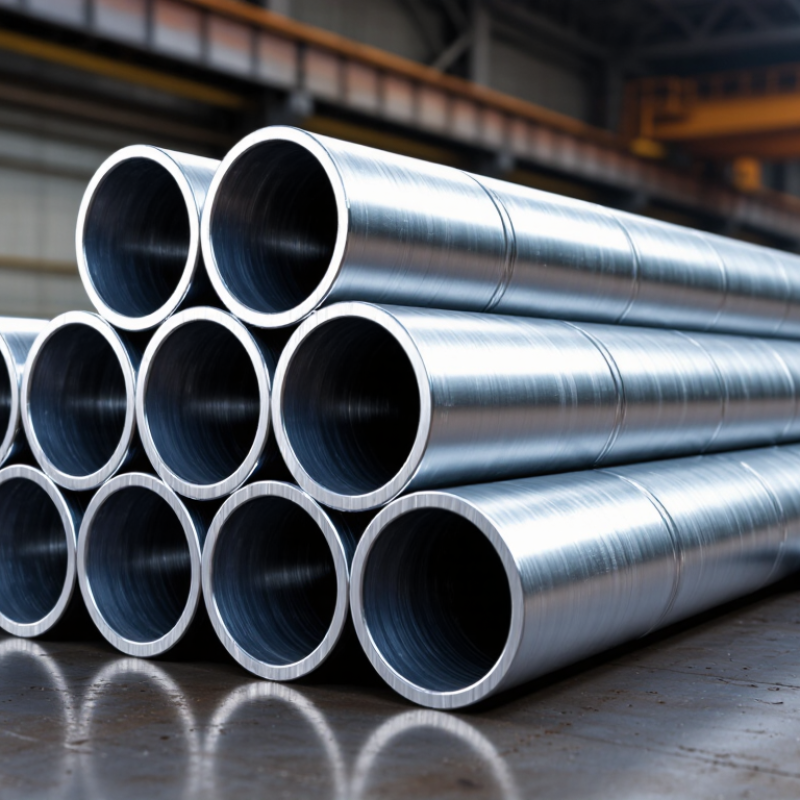
Seamless steel tube is made from a solid round billet, not a welded strip. The billet is heated, pierced, and rolled into a hollow section. Some tubes receive cold drawing for tighter dimensions and smoother surfaces. Because there is no longitudinal weld, stress is distributed more evenly around the tube wall.
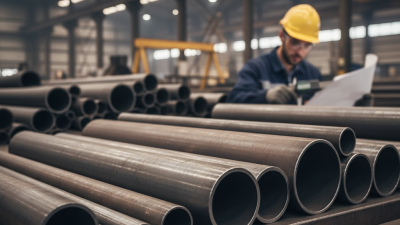
This structure supports demanding uses, including pressure lines, heat exchangers, boilers, and hydraulic systems. However, “seamless” does not mean defect-free. In field inspections, wall thickness variation, ovality, and surface cracking still require attention. Manufacturing quality matters as much as the production method.
The global scale of steel production explains why consistent standards are essential. World Steel Association data reports approximately 1.88 billion tonnes of crude steel production in 2024. A small quality difference can affect thousands of installed tubes. Standards such as ISO 3183 specify requirements for steel pipe used in pipeline transportation systems, including testing, dimensions, and traceability.
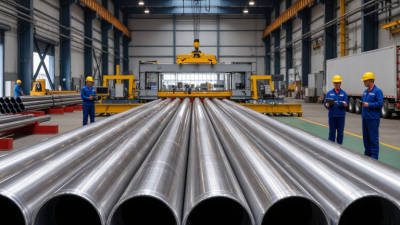
Engineers usually verify chemical composition, tensile strength, yield strength, and hydrostatic performance. Non-destructive testing can identify internal or surface discontinuities. A tube may look flawless under warehouse lighting, yet fail a critical inspection. That uncomfortable possibility deserves respect.
Seamless tube often costs more than welded tube. It is not always the best choice. For high pressure, elevated temperature, or severe cyclic loading, its manufacturing route can provide valuable reliability. Project conditions should decide.
Key Properties of Seamless Steel Tubes
Seamless steel tubes remain valuable in global projects because their continuous walls remove a welded seam from the pressure boundary. This structure supports reliable performance under pressure, vibration, and thermal cycling. World Steel Association data reported 1.89 billion tonnes of crude steel production in 2023, showing the scale behind modern steel infrastructure. Yet production volume does not guarantee suitable tube quality.
Key properties begin with strength and dimensional consistency.
ASTM A106 Grade B requires at least 60 ksi tensile strength and 35 ksi yield strength. These values suit many high-temperature fluid services, when design calculations support them. ASME B31.3 requires engineers to consider pressure, temperature, corrosion allowance, and manufacturing tolerance. A thicker wall is not automatically safer. It can increase weight and create slower heat transfer.
Seamless tubes also offer dependable fatigue resistance when surfaces are properly finished and inspected. Ultrasonic testing can reveal internal discontinuities that visual checks may miss. Corrosion resistance depends on alloy selection, fluid chemistry, temperature, and oxygen exposure. Seamless does not mean corrosion-proof. This is often misunderstood. The World Steel Association’s material data supports steel’s broad industrial use, but each project still needs traceable mill certificates, hydrostatic testing, and independent verification. In practice, the best specification may combine seamless construction with a corrosion-resistant alloy, rather than choosing seamless steel by habit.
Why Global Projects Choose Seamless Steel Tubes
Why Global Projects Choose Seamless Steel Tubes
Global projects choose seamless steel tubes when pressure, temperature, and reliability cannot be negotiated. These tubes have no welded seam, reducing potential weak points under demanding service conditions. They support pipelines, boilers, heat exchangers, hydraulic systems, and structural applications. Global Infrastructure Hub’s Global Infrastructure Outlook estimates that worldwide infrastructure needs could reach 94 trillion US dollars by 2040. Such investment requires materials with predictable performance and traceable quality. In field inspections, wall thickness, ovality, and surface defects often influence service life more than appearance. Seamless does not mean maintenance-free.
Material selection still requires careful judgment. Engineers should review pressure ratings, operating temperature, corrosion exposure, and connection methods. Relevant specifications, including ASTM and ASME requirements, help define chemical composition, testing, and dimensional tolerances. The World Steel Association reported approximately 1.84 billion tonnes of crude steel production in 2024. That scale supports broad supply, but availability does not guarantee suitability. Sometimes, a welded tube may be more economical for low-risk service. This is where project assumptions deserve a second look.
Tips:
Request mill test certificates and independent inspection records. Confirm ultrasonic or hydrostatic testing requirements before ordering. Match grade, schedule, and end finish to the actual design. Allow extra time for customs, documentation, and replacement sections. A cheaper tube can become expensive after one failed inspection.
Applications and Selection Criteria for International Projects
Why Choose Seamless Steel Tube for Global Projects?
International projects rarely fail because a tube looks wrong. They fail when service conditions are underestimated. Seamless steel tube suits high-pressure pipelines, boiler systems, heat exchangers, and structural supports. Its continuous wall reduces weld-related weak points. This matters under pressure, vibration, and repeated temperature changes. Field engineers often value predictable performance more than a lower purchase price.
Selection must begin with the application. Define pressure, temperature, fluid chemistry, wall thickness, and loading cycles. Check whether the design follows ISO, ASTM, or ASME requirements. Corrosion deserves special attention. The NACE IMPACT study estimated global corrosion costs at about 3.4% of worldwide gross domestic product. That figure makes material compatibility difficult to ignore. Carbon steel may work in dry service, but wet chloride conditions can demand alloy steel or protective treatment. The cheapest option may become expensive quickly.
Supply reliability also shapes international decisions. The World Steel Association reported approximately 1.89 billion tonnes of crude steel production in 2023. Large output does not guarantee consistent tube quality. Buyers should request heat numbers, chemical analysis, mechanical results, dimensional records, and non-destructive testing reports. Independent inspection can verify them before shipment. Small details matter.
A practical specification should also address tolerances, end finishing, packaging, traceability, and documentation language. Local climate and transport routes deserve review. Salt air can attack unprotected surfaces before installation. No selection method is perfect. Engineers sometimes over-specify materials, while others trust certificates without checking the actual service environment. That gap deserves a second look.