In the realm of structural and plumbing projects, the significance of stainless steel pipes cannot be overstated. Renowned expert in materials engineering, Dr. Emily Chen, once remarked, "Stainless steel pipes not only enhance the durability of construction projects but also offer outstanding resistance to corrosion, making them ideal for a variety of applications." This statement encapsulates the fundamental advantages that stainless steel pipes provide, paving the way for their extensive use in various industries.
Stainless steel pipe is distinguished by its strength, versatility, and longevity, making it a preferred choice for both residential and industrial applications. With a variety of types and grades available, each designed to meet specific needs, the understanding of stainless steel pipes has become crucial for project managers and engineers alike. This guide will explore the different types of stainless steel pipes and how they can be effectively utilized in your projects, ensuring that the right choice is made to optimize performance and maintain structural integrity over time. As we delve deeper, we'll uncover the unique characteristics and applications of each type, providing valuable insights for informed decision-making.
Stainless steel pipe is a versatile and durable material commonly used in a range of industrial and construction projects. It is primarily composed of iron, carbon, and a minimum of 10.5% chromium, which grants it the ability to resist rust and corrosion. This composition makes stainless steel pipe ideal for applications where exposure to moisture and other corrosive elements is a concern. Additionally, the presence of chromium forms a protective layer on the surface, which enhances its longevity and structural integrity.
The properties of stainless steel pipes further contribute to their widespread usage. Besides outstanding corrosion resistance, they exhibit remarkable strength and toughness. Stainless steel pipes can withstand high temperatures and pressures, making them suitable for demanding environments such as oil and gas, food processing, and pharmaceuticals. Their ability to maintain structural integrity under extreme conditions means they are not only safe but also cost-effective in the long run, as they require minimal maintenance compared to other materials.
| Type of Stainless Steel Pipe | Composition | Properties | Common Applications |
|---|---|---|---|
| Austenitic Stainless Steel Pipe | Contains chromium, nickel, and often molybdenum | Corrosion resistance, good ductility, and formability | Food processing, pharmaceuticals, and chemical industries |
| Ferritic Stainless Steel Pipe | High chromium content, low nickel content | Magnetic, good resistance to stress corrosion cracking | Automotive applications, exhaust systems |
| Martensitic Stainless Steel Pipe | Contains chromium and carbon, can be heat-treated | High strength, moderate corrosion resistance | Cutlery, valves, and turbine blades |
| Duplex Stainless Steel Pipe | Contains a mix of austenitic and ferritic phases | Higher strength and resistance to pitting corrosion | Oil and gas, marine applications |
| Super Duplex Stainless Steel Pipe | Contains a higher amount of chromium and molybdenum | Exceptional corrosion resistance and strength | High chloride environments, such as desalination plants |
Stainless steel pipes offer numerous advantages that make them a popular choice across various industries. One of the key benefits is their exceptional corrosion resistance, which allows them to withstand exposure to harsh chemicals, moisture, and extreme environmental conditions. This quality is particularly valuable in industries such as food processing, pharmaceuticals, and petrochemicals, where hygiene and safety are paramount. The ability to maintain structural integrity over time results in reduced maintenance costs and extended service life for equipment using stainless steel pipes.
Another significant advantage is their strength and durability. Stainless steel pipes can endure high pressure and temperature extremes, making them suitable for demanding applications in sectors like oil and gas, construction, and automotive. Their robustness ensures reliable performance in critical systems, contributing to operational efficiency. Additionally, stainless steel’s and ease of fabrication allow for versatility in design, making it the material of choice for both functional and architectural applications. With a lower risk of leaks and failures, industries can benefit from enhanced safety for their operations, underscoring the value of stainless steel pipes in modern engineering solutions.
Stainless steel pipes are an essential component in various industries, known for their durability, corrosion resistance, and versatility. There are several types of stainless steel pipes, each categorized based on specific applications and the grades of stainless steel used.
The most common grades include 304, 316, and 2205. Grade 304, often referred to as the general-purpose stainless steel, is widely used in food processing and kitchen equipment due to its excellent corrosion resistance and formability. According to industry reports, approximately 50% of all stainless steel produced is of the 304 grade.
Grade 316 stainless steel, on the other hand, is favored in marine and chemical processing applications due to its enhanced resistance to pitting and crevice corrosion caused by chlorides. This makes it ideal for environments that expose materials to harsh chemicals or saltwater. The use of 316 stainless steel is supported by data from the American Iron and Steel Institute, indicating that its demand has been steadily increasing, particularly in the oil and gas industry.
Lastly, duplex stainless steel, such as grade 2205, which combines the properties of both austenitic and ferritic stainless steels, is gaining traction in industries requiring high strength and resistance to stress corrosion cracking. Its usage has grown by more than 15% over the past decade, reflecting a shift toward more resilient material solutions in various demanding applications.

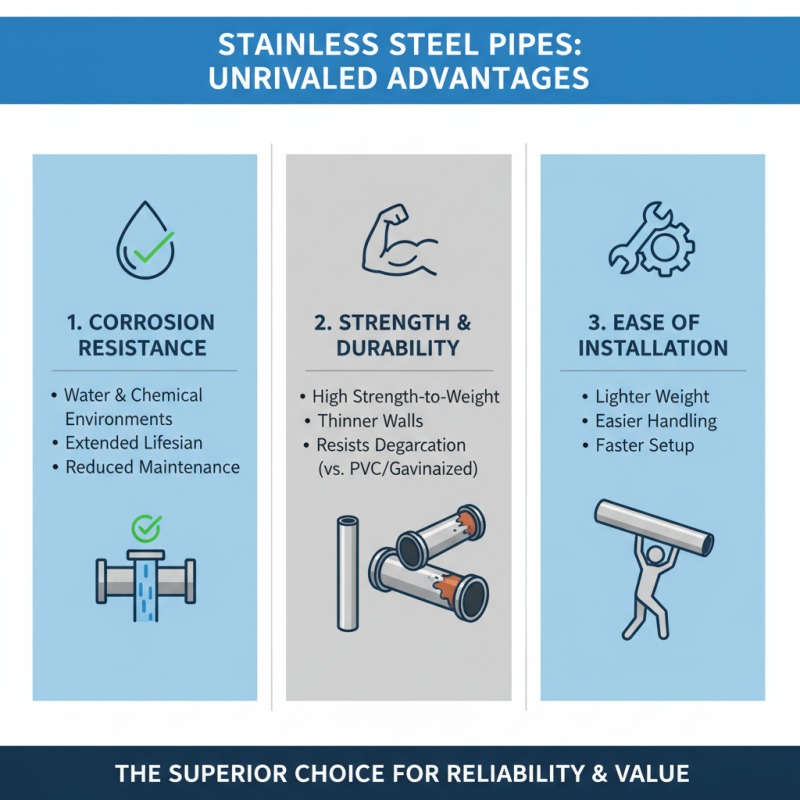
When comparing stainless steel pipes to other pipe materials, it is essential to consider their unique properties. Stainless steel pipes are renowned for their exceptional resistance to corrosion, making them ideal for a variety of environments, particularly those involving water and chemicals. This advantage often grants stainless steel an extended lifespan and reduces maintenance costs compared to pipes made from materials like PVC or galvanized steel, which can degrade more rapidly under harsh conditions. Furthermore, the high strength-to-weight ratio of stainless steel allows for thinner walls, resulting in lighter pipes that are easier to handle and install.
In terms of thermal conductivity, stainless steel is less efficient than copper but provides a more reliable option in terms of heat resistance. Unlike plastic pipes, stainless steel is not susceptible to degradation from UV exposure, ensuring its integrity in outdoor applications. Additionally, stainless steel pipes maintain structural integrity under high pressures, making them a safer choice for high-stress applications such as industrial and plumbing systems. The combination of durability, safety, and long-term cost-effectiveness makes stainless steel pipes an increasingly popular choice in various construction and engineering projects.
Stainless steel pipes are renowned for their versatility and durability, making them an excellent choice for various industrial applications. They are effectively used in sectors such as petrochemical, pharmaceuticals, food and beverage, and construction. In the petrochemical industry, they play a critical role in transporting aggressive fluids and gases due to their corrosion resistance. Similarly, in the pharmaceutical and food sectors, the hygienic properties of stainless steel are crucial for maintaining product integrity and safety.
When selecting stainless steel pipes for your projects, consider the specific requirements of each application. For example, the grade of stainless steel pipe can significantly impact its performance in different environments. Austenitic stainless steels, known for their good ductility and corrosion resistance, are often used in food processing. In industries that involve high pressure or temperature, ferritic stainless steels may provide the necessary strength.
**Tips:** Always consult with professionals to ensure you choose the right type of stainless steel pipe for your needs. Additionally, consider the installation environment and maintenance requirements to maximize the lifespan of the pipes. Regular inspections can help prevent costly repairs and ensure that the pipes function efficiently.