Top Steel Tube Manufacturers for Global Buyers?
For global buyers, choosing a Steel Tube manufacturer is about more than finding a low price. The right supplier must match the product to its intended use, delivery schedule, and quality requirements. A tube for structural framing may need different dimensions and performance than one used in machinery or fluid systems. Small details matter: wall thickness, outside diameter, steel grade, surface finish, and allowable tolerances can all affect fit and fabrication. A polished catalog helps. It does not prove consistency.
This guide looks at manufacturers through practical questions buyers can verify. Can the supplier provide clear specifications, test reports, and relevant mill certificates? Are production capacity, sample inspection, corrosion protection, and lead times explained plainly? Buyers should also examine packaging, shipping options, and how quickly technical questions receive useful answers. These checks do not guarantee a perfect order, but they make comparisons more grounded. There is no perfect shortlist. A supplier with impressive equipment may still be a poor fit if communication is slow or minimum order quantities are too high. The rankings and profiles that follow should therefore be treated as a starting point, not a substitute for checking current capabilities, documentation, and product samples before committing.
Steel Tube Basics: ERW, Seamless, Welded, and Structural Product Types
Steel tube selection starts with service conditions, not a catalog label. ERW tubes are formed from steel strip and joined along a longitudinal seam using electric resistance welding. They suit many applications where consistent dimensions and efficient production matter. Check seam quality, wall thickness, and dimensional tolerances against the project specification.
Seamless tubes are made without a welded seam, typically by piercing and rolling a solid billet. Buyers may consider them for demanding pressure, temperature, or fatigue conditions, but “seamless” alone does not guarantee suitability. Material grade, heat treatment, testing, and operating conditions still matter. Details matter here.
Welded tube is a broader category that includes ERW and other seam-welding processes, such as submerged arc welding for larger sections. Structural tubes, often round, square, or rectangular, are used for frames, supports, and building components. Their shape affects load behavior and connection design: square sections may simplify bracket layout, while round sections can suit curved assemblies. Verify certificates, traceability, and inspection records when comparing suppliers. Product descriptions sometimes blur these categories, so clarify the manufacturing process and intended use before ordering.
Steel Tube Basics: ERW, Seamless, Welded, and Structural Products
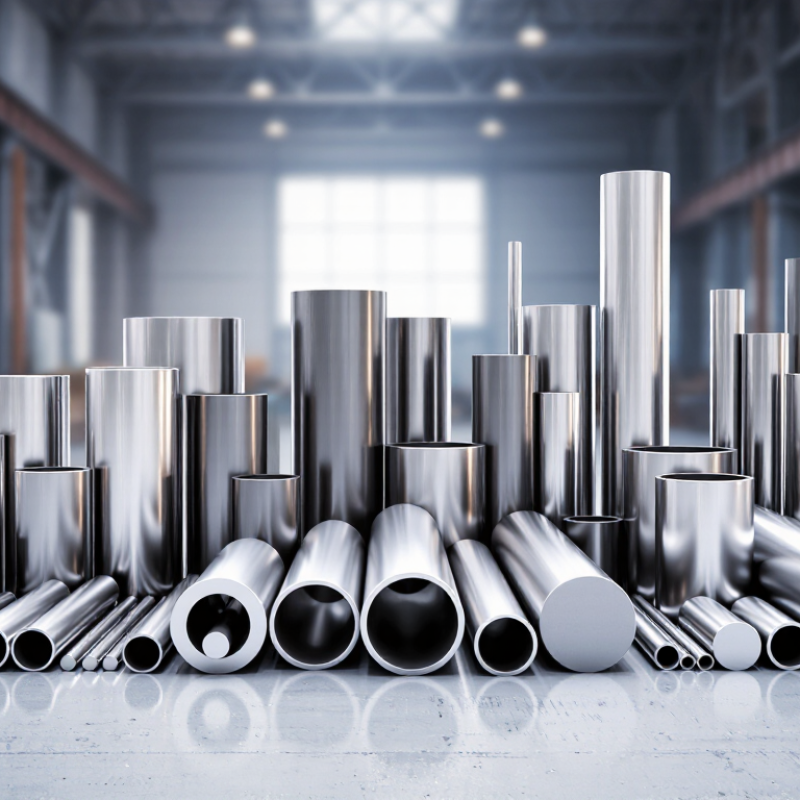
ERW and submerged-arc-welded (SAW) tubes are welded products; seamless tubes are made without a welded seam. Structural describes a product’s intended use or shape, not a manufacturing route, so structural tubing may be welded or seamless. This chart is a classification guide, not a comparison of manufacturers.
Buyer-Critical Standards: API 5L, ISO 3183, and ASTM A500 Grade B’s 46-ksi Yield
For global buyers, the grade stamped on a tube is only the starting point. API Specification 5L and ISO 3183 cover line pipe, with requirements tied to grade, product level, testing, and delivery condition. ASTM A500 covers cold-formed structural tubing. Grade B has a specified minimum yield strength of 46 ksi (315 MPa). These standards serve different uses, so matching a number on a datasheet does not prove that products are interchangeable.
Evidence matters. Request the mill test report and check that its heat number matches the tube marking and purchase order. Confirm the stated standard edition, grade, dimensions, and test results; ask how any nonconformities were handled. A mill certificate is useful, but it is not the whole story. That gap matters. The World Steel Association’s World Steel in Figures 2024 reports 1,892.2 million tonnes of crude steel production in 2023, underscoring the scale of the supply chain—not the quality of any individual tube. For critical projects, independent inspection and traceable records can help verify what arrived. Even careful checks may miss a paperwork mismatch, so buyers should compare documents against the physical marking before acceptance.
Global Supplier Profiles: Tenaris, Vallourec, TMK, Nippon Steel, and JFE Steel
Global buyers comparing the five profiled suppliers should look beyond name recognition. Their portfolios span seamless and welded pipe, line pipe, and products for demanding energy applications. One supplier has Latin American roots; another is associated with European tube production. A large Eurasian producer and two Japanese integrated steelmakers complete the group. Product range varies by plant. Confirm the exact mill, grade, dimensions, and testing scope before requesting a quote.
Market data gives useful context, but not a direct measure of tube availability. The World Steel Association’s October 2024 Short Range Outlook put global steel demand at 1.75 billion tonnes for 2024, with a forecast recovery to 1.77 billion tonnes in 2025. The OECD’s 2023 Steel Outlook also projected global steelmaking capacity reaching about 2.5 billion tonnes by 2025. Capacity is not the same as qualified pipe supply. Ask suppliers for mill test certificates, traceability records, and delivery estimates tied to the specific production site. Fit matters more. A polished catalogue can still leave gaps: buyers should compare lead times, inspection options, and coating requirements against the project’s actual operating conditions.
How to Compare Tube Mills: Capacity, Quality Systems, Traceability, and Lead Times
A tube mill’s stated capacity is only a starting point. Ask how much usable output it can deliver for your diameter, wall thickness, steel grade, and finish. A line running thin-wall tubing may not maintain the same rate on heavier sections. Request recent production data, not just a nameplate figure. Numbers can mislead.
Quality systems matter when they produce records you can verify. Review inspection plans, calibration logs, weld checks, and dimensional reports for the product you actually need. Ask how the mill handles nonconforming material and whether corrective actions are documented. A certificate alone is not the whole story. During an audit, compare the paperwork with sample production records; gaps can be easy to overlook.
Traceability should connect each shipment to its steel heat or coil, production batch, and inspection results. Ask for a sample material record before placing an order. Lead times also need a closer look: include tooling changes, sample approval, production scheduling, testing, and packing. Request a delivery schedule with clear milestones and update rules. Then compare like with like across mills. I have seen buyers focus on quoted weeks and miss approval time, though freight assumptions can still make comparisons imperfect. Ask for assumptions in writing.
Procurement Checks: Mill Test Certificates, Dimensions, Testing, and Lifecycle Cost
A mill test certificate should connect the tube in your shipment to its heat number, grade, chemistry, and mechanical results. Check that the numbers match the order and markings on the bundle. A certificate that lists tensile strength but omits the test method deserves a follow-up. Small errors matter. Confirm outside diameter, wall thickness, length, ovality, and end finish against the drawing, including tolerances. For line pipe, ISO 3183 may apply; tensile testing is covered by ISO 6892-1. Agree on the applicable standard and sampling plan before production, not after a dispute. A neat file can still hide a mismatch.
Testing and lifecycle cost need equal attention. Specify inspection frequency, hydrostatic or nondestructive testing where relevant, and how nonconforming lengths will be handled. The World Steel Association’s 2023 Sustainability Indicators reported an average of about 1.91 tonnes of CO₂ per tonne of crude steel for 2022. This is a sector benchmark, not a footprint for any specific tube. Still, it makes production route and documented environmental data worth asking about. NIST Handbook 135 frames lifecycle costing around costs over time, not purchase price alone. Compare freight, inspection, coating, installation, maintenance, replacement, and disposal. The cheapest quote may become expensive after one delayed delivery or premature failure. Some estimates remain uncertain; state the assumptions behind them.