Leave Your Message

How to Choose Alloy Steel Pipe in 2026?

Choosing an Alloy Steel Pipe in 2026 starts with the service conditions, not the price per meter. A pipe carrying hot steam through a plant faces different risks from one exposed to sour gas or repeated pressure cycles. Temperature, pressure, corrosion, weldability, and design life should shape the specification. Small details matter. A mill certificate, heat number, and traceable test results can prevent costly confusion when bundles arrive on site.

The World Steel Association’s World Steel in Figures 2025 reports global crude steel production of 1,882.6 million tonnes in 2024. That figure gives useful industry context, but it is not an alloy-pipe demand estimate. Buyers should verify product-specific requirements against the applicable standard, such as ASTM A335 for seamless ferritic alloy-steel pipe in high-temperature service. Materials scientist William D. Callister expresses a core selection principle: “The properties of a material are determined by its structure.” In practice, grade names alone are not enough; chemistry, heat treatment, dimensions, and inspection records also count.

There is no universal “best” pipe. That is easy to say, harder to apply. This guide explains how to compare grades, standards, supplier documentation, and lifecycle costs for 2026 projects. It also flags a common blind spot: choosing a familiar grade before confirming the actual operating temperature and corrosion conditions. A careful specification may take longer. It is usually cheaper than discovering a mismatch after installation.

How to Choose Alloy Steel Pipe in 2026?

Define Operating Conditions and Pipe Service Requirements

How to Choose Alloy Steel Pipe in 2026?

Define Operating Conditions and Pipe Service Requirements

Before choosing alloy steel pipe, define the actual service envelope—not just nominal pressure. Record design and upset temperatures, pressure cycles, flow velocity, fluid chemistry, solids, and startup frequency. Wet gas containing chlorides needs a different review from dry steam, even at the same pressure. Specify acceptable corrosion and erosion rates, along with welding, heat-treatment, and inspection requirements. Small details matter. Check minimum metal temperature as carefully as maximum temperature; cold starts can raise brittle-fracture concerns. Confirm dimensions and joining methods against the project’s governing code and material specifications.

Tips: Create a one-page service sheet for the pipe supplier and design team. Include fluid composition, operating ranges, transient conditions, and expected service life. Flag unknown values instead of assuming ideal conditions. A missing chloride concentration or temperature spike can undermine an otherwise careful material selection.

Corrosion deserves explicit attention. NACE International’s 2016 IMPACT study estimated global corrosion costs at US$2.5 trillion, or 3.4% of global GDP, using 2013 data. The study also estimated that improved corrosion-control practices could save 15–35% of those costs. These are broad, historical estimates, not pipe-specific predictions. Still, they show why alloy selection should follow service analysis, not habit. A higher-alloy grade is not automatically the safer or more economical choice.

How to Choose Alloy Steel Pipe in 2026? - Define Operating Conditions and Pipe Service Requirements

Selection dimension Operating condition or requirement Relevant material or design consideration What to verify
Applicable product standard High-temperature service requiring seamless alloy-steel pipe. ASTM A335 covers seamless ferritic alloy-steel pipe intended for high-temperature service. The required grade and dimensions depend on the design specification. Specify the governing product standard, grade, nominal size, wall thickness, and applicable code edition.
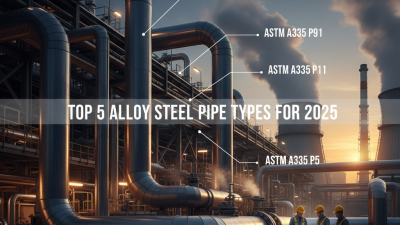
Temperature and creep exposure Continuous or repeated exposure to elevated metal temperatures, such as steam or process piping. Common A335 options include P11 (about 1.25Cr–0.5Mo), P22 (about 2.25Cr–1Mo), and P91 (about 9Cr–1Mo with vanadium and other alloying additions). Higher alloy content alone does not determine allowable service temperature. Use the applicable construction code’s allowable-stress data, design metal temperature, expected service life, and creep considerations.
Hydrogen-containing service Hydrogen partial pressure and temperature may create a risk of high-temperature hydrogen attack in refinery or chemical-process equipment. Cr-Mo alloy selection must be evaluated for the specific hydrogen service; grade choice cannot be made from total pressure alone. Assess hydrogen partial pressure and operating temperature against the current API 941 guidance and the project’s materials requirements.
Sulfur-bearing or corrosive process fluids Hot streams containing sulfur compounds, or fluids with other corrosion mechanisms. Chromium-molybdenum grades may be considered in some refinery services, but corrosion performance depends on temperature, chemistry, flow, and contaminants. Identify the controlling corrosion mechanism, corrosion rate, corrosion allowance, and any need for a separate corrosion-resistant material or lining.
Pressure and wall thickness Design pressure, temperature, pipe outside diameter, and external loads determine the required pressure-containing wall. A stronger alloy grade does not by itself establish the required schedule or eliminate code design checks. Calculate minimum thickness under the applicable piping code, including tolerances, allowances, loads, and the specified manufacturing wall-thickness tolerance.
Low-temperature toughness Startup, shutdown, ambient conditions, or depressurization may expose the pipe to low metal temperatures. An alloy grade designation does not automatically guarantee suitability at every low temperature. Confirm the required impact-test temperature, test acceptance criteria, heat treatment, and any code or project exemptions.
Welding and heat treatment Field or shop fabrication involving welding, repair, or subsequent heat treatment. Higher-alloy grades such as P91 require carefully controlled welding and heat-treatment practices to achieve specified properties. Approve the welding procedure, preheat and interpass controls, post-weld heat treatment where required, and hardness or other examination requirements.
Thermal cycling and service life Frequent starts and stops, rapid temperature changes, or long-duration operation at elevated temperature. Fatigue, creep, thermal expansion, support loads, and the interaction of these effects can influence material and piping-system suitability. Review the operating cycle, design life, flexibility analysis, transient conditions, and inspection plan.
Inspection and material traceability The pipe must meet project quality, code, and delivery documentation requirements. Product-standard compliance should be supported by inspection and test documentation for the supplied material. Check material test reports, heat identification, chemical and mechanical test results, heat-treatment records, and specified nondestructive examination.

Selection basis: Confirm the complete design envelope—including pressure, metal temperature, fluid composition, corrosion mechanisms, operating cycles, and fabrication requirements—before specifying a grade. Final material and thickness selection should follow the governing code, current standards, and project engineering review.

Compare Alloy Steel Grades, Standards, and Specifications

How to Choose Alloy Steel Pipe in 2026? Compare grades, standards, and specifications before comparing prices. ASTM A335 covers seamless ferritic alloy-steel pipe for high-temperature service. Common grades include P11, P22, and P91, but a higher alloy content does not automatically mean a better choice. Match grade chemistry and mechanical properties to operating temperature, pressure, and process conditions. Check the specified heat treatment, tensile requirements, and impact-test requirements on the material certificate. Details matter.

Dimensions need equal care. ASME B36.10M defines pipe dimensions, including nominal size and wall thickness, while the applicable design code sets service requirements. A “Schedule 80” label alone does not confirm pressure suitability; verify the actual outside diameter and minimum wall thickness against the project calculation. The World Steel Association reported 1,892.2 million tonnes of crude steel production in 2023 in World Steel in Figures 2024. That broad market figure is not a pipe-grade selector, so confirm availability and traceability for the exact specification. I’ve seen selections become less clear when buyers treat standards as interchangeable. They are not. Cross-check the full grade designation, standard edition, manufacturing route, inspection scope, and permitted tolerances before ordering.

How to Choose Alloy Steel Pipe in 2026? Compare Alloy Steel Grades, Standards, and Specifications

ASTM A335 P11 and P22 have a minimum specified yield strength of 205 MPa, while P91 is 415 MPa. These are minimum room-temperature values; confirm the applicable standard edition, product specification, service conditions, and material test certificate before selecting a grade.

Select Pipe Dimensions, Manufacturing Methods, and Heat Treatment

How to Choose Alloy Steel Pipe in 2026?

Choosing alloy steel pipe starts with the service conditions, not the catalog. Record operating temperature, pressure, fluid, corrosion exposure, and expected thermal cycling. Then match the grade and dimensions to the design requirements. ASME B36.10M provides standard pipe dimensions: for example, NPS 2 Schedule 80 pipe has a 2.375-inch outside diameter and a nominal 0.218-inch wall. Check the specified schedule, tolerance, and corrosion allowance; nominal wall thickness is not the guaranteed minimum.

Small details matter.

Manufacturing route matters, too. ASTM A335/A335M covers seamless ferritic alloy-steel pipe intended for high-temperature service. Seamless pipe avoids a longitudinal weld, but it is not automatically the best choice for every duty. Compare the purchase specification, inspection records, and dimensional tolerances with the application. Ask how the pipe was formed and inspected.

A neat certificate alone may not answer every question.

Heat treatment must suit the exact grade and product specification. Normalizing, tempering, or other specified cycles affect strength, toughness, and microstructure; do not assume one treatment fits all. Review the mill test report for grade, heat number, chemistry, tensile results, and treatment condition. Verify traceability on the pipe itself. In practice, a tidy spreadsheet can still hide a mismatch between design temperature and selected grade. Recheck the assumptions before ordering.

Assess Mechanical Properties, Testing, and Traceability

Choosing alloy steel pipe in 2026 starts with the conditions it must withstand. Check the specified grade against operating temperature, pressure, corrosion exposure, and fabrication needs. Compare yield strength, tensile strength, elongation, and hardness—not just a headline strength value. For cold service, confirm whether impact testing is required at the relevant temperature. Small details matter.

Testing should match the purchase specification and intended use. Review the material test report for chemistry and mechanical results, then confirm required inspection methods. Ultrasonic or radiographic examination can help identify certain flaws; hydrostatic testing checks pressure integrity. Neither replaces the other. Verify acceptance criteria, test coverage, and sample frequency before ordering, rather than assuming every pipe receives identical checks.

Traceability connects each pipe to its production and inspection records. Match heat numbers on the pipe, bundle tags, and certificates, and check that markings remain legible after cutting. Keep the link intact. A polished document package can still contain a mismatch, so compare actual markings with the records at receipt. This step is easy to rush when schedules tighten. That is where procurement plans often meet messy reality.

Evaluate Suppliers, Lifecycle Costs, and 2026 Compliance

For “How to Choose Alloy Steel Pipe in 2026?”, compare suppliers on traceability, test records, and delivery consistency—not price alone. Request material test reports linked to each pipe’s heat number, plus inspection and non-destructive testing records where specified. Check that the proposed grade suits the service temperature, pressure, and fluid chemistry. A polished certificate is useful, but it cannot replace checking the actual documents.

Lifecycle cost deserves equal attention. AMPP’s 2016 IMPACT study estimated corrosion costs at US$2.5 trillion annually, or 3.4% of global GDP; it also estimated that corrosion-control practices could save 15–35%. These figures cover many industries, not alloy pipe alone, but they underline why inspection access, maintenance, and replacement intervals belong in purchasing decisions. A low quote still looks tempting. It may not stay low.

For 2026 compliance, match the purchase specification to the project’s jurisdiction, service, and contract requirements. Verify the applicable edition of standards such as ASTM A335/A335M and the relevant ASME piping code; edition and scope matter. Ask suppliers to confirm grade, dimensions, heat treatment, and required testing in writing. Keep records reviewable. Requirements can vary by project, and that detail is easy to miss.