How to Choose the Right Seamless Steel Pipe?
Choosing the right Seamless Steel Pipe is a technical decision, not a simple purchasing exercise. The pipe must withstand pressure, temperature, corrosion, vibration, and installation stress. A wrong grade may look acceptable in a warehouse, yet fail after months of thermal cycling. That risk makes traceable specifications essential.
Industry data shows why careful selection matters. The World Steel Association reported approximately 1.89 billion tonnes of crude steel production worldwide in 2023, highlighting the scale of the global steel supply chain. However, production volume does not guarantee suitability. ASTM A106 is commonly selected for high-temperature service, while ASTM A53 may fit general mechanical and pressure applications. API 5L remains important for oil and gas line pipe, especially where documented testing and controlled manufacturing are required. ASME B36.10M also helps engineers match outside diameter and wall thickness with established dimensional practices.
The practical choice begins with service conditions. Record the design pressure, operating temperature, fluid composition, pipe diameter, wall thickness, connection method, and corrosion allowance. Ask for the mill test certificate, heat number, chemical analysis, tensile results, and hydrostatic test records. Look closely at the ends and surface. Small defects can become serious under repeated loading. It is easy to over-specify a pipe, too. That adds cost without improving safety. No checklist is perfect. Field conditions, supplier consistency, and installation quality can still change the outcome. For critical systems, qualified engineers should verify the selected standard and inspection plan before ordering. Data guides the decision, but disciplined judgment completes it.
Understanding Seamless Steel Pipe Structure and Manufacturing
How to Choose the Right Seamless Steel Pipe?
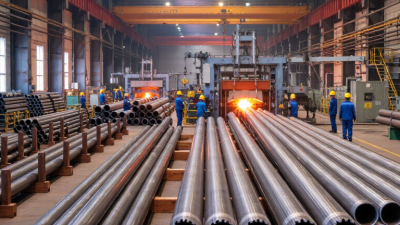
Seamless steel pipe begins with a solid round billet, not a welded strip. The billet is heated, pierced, and elongated over a mandrel. Its metal grain flows continuously around the pipe body. That structure can improve resistance to internal pressure, but it does not guarantee reliability. Chemical composition, inclusions, wall thickness, and heat treatment still matter. World Steel Association data reports 1.888 billion tonnes of crude steel production in 2023. Large output does not mean uniform pipe quality.
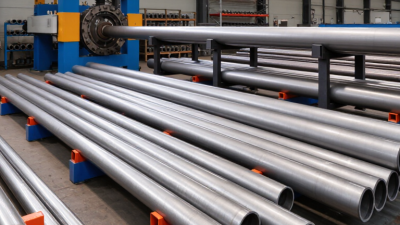
Hot-finished pipe suits many high-temperature and pressure services. Cold-drawn pipe offers tighter dimensions and a smoother internal surface. This difference becomes visible when a caliper meets the pipe ends. Check outside diameter, wall thickness, ovality, and straightness against the required specification. Non-destructive testing can reveal longitudinal flaws that visual inspection may miss. Radiographic, ultrasonic, or eddy-current methods should match the pipe’s risk level.
Manufacturing records deserve close attention. Ask for heat numbers, chemical test results, tensile data, hardness results, and hydrostatic or electromagnetic test records. ASTM and ISO specifications define useful limits, but purchasing language can remain vague. That is where mistakes begin. A pipe may meet nominal dimensions yet fail a service requirement because its temperature range was overlooked. The International Energy Agency’s Oil 2024 report expects continuing investment in oil and gas supply infrastructure, increasing the need for traceable pressure components. Reconsider the cheapest option when inspection evidence is thin. It often is.
Identifying Required Material Grade and Mechanical Properties
How to Choose the Right Seamless Steel Pipe?
Material grade should match the service, not merely the purchase description.
ASTM A106 Grade B, commonly used for high-temperature service, specifies a minimum yield strength of
240 MPa
and tensile strength of
415 MPa
. These values help engineers assess pressure resistance, but they do not predict every field condition. Temperature, corrosion, welding, and cyclic loading still matter.
API 5L X52
requires at least
359 MPa yield strength
and
455 MPa tensile strength
, according to API 5L requirements. That higher strength may reduce wall thickness, yet it can complicate forming and welding. ASTM A519 mechanical tubing grades also vary significantly in hardness and elongation. Check the mill test certificate, heat number, chemistry, and test method. A certificate without traceability is weak evidence.
Tips:
Define pressure, temperature, diameter, and wall thickness before selecting a grade. Compare yield strength, tensile strength, elongation, impact toughness, and hardness. Request Charpy impact data when low temperatures are possible. Do not assume a stronger pipe is automatically safer. I have seen specifications focus on tensile strength while ignoring toughness and weldability. That shortcut deserves reconsideration. Standards provide limits, not complete design decisions.
Matching Pipe Dimensions, Wall Thickness, and Tolerances
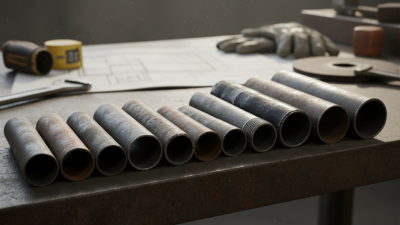
Choosing the right seamless steel pipe starts with the actual service conditions. Match outside diameter, inside diameter, and connection requirements before selecting a schedule. ASME B36.10M dimensional tables show that a 2-inch pipe has a 60.3 mm outside diameter. Its Schedule 40 wall is 3.91 mm, while Schedule 80 reaches 5.54 mm. The diameter stays constant, but the flow area changes.
Wall thickness must handle pressure, temperature, corrosion allowance, and installation loads. A thicker wall is not automatically safer. It can reduce flow and increase weight. ASTM A106/A106M requires the measured wall thickness to remain within its specified minimum limit, commonly 12.5% below nominal thickness. Use the latest project specification, because editions and product grades can differ. A neat schedule number can still be the wrong choice.
Tips: Confirm NPS, outside diameter, wall thickness, length, and end finish on the purchase document. Ask for mill test reports and dimensional inspection records. Check several points around each pipe, not only one location. Field measurements often reveal ovality or local thinning that a catalogue value misses. I have seen selections fail because engineers matched nominal size but ignored the mating flange tolerance. That small oversight creates rework. ISO 4200 and relevant ASTM requirements can support the final dimensional review, but neither replaces a pressure-design calculation. Temperature changes also deserve attention; thermal expansion may alter alignment across long pipe runs.
How to Choose the Right Seamless Steel Pipe?
Matching pipe dimensions, wall thickness, and manufacturing tolerances
This comparison uses common ASME B36.10M Schedule 40 nominal dimensions for seamless and welded carbon steel pipe.
The minimum wall thickness is calculated using a −12.5% wall-thickness allowance commonly specified for ASTM A106 carbon steel pipe.
Select a pipe size only after confirming the required outside diameter, pressure-related wall thickness, corrosion allowance, and applicable dimensional tolerances.