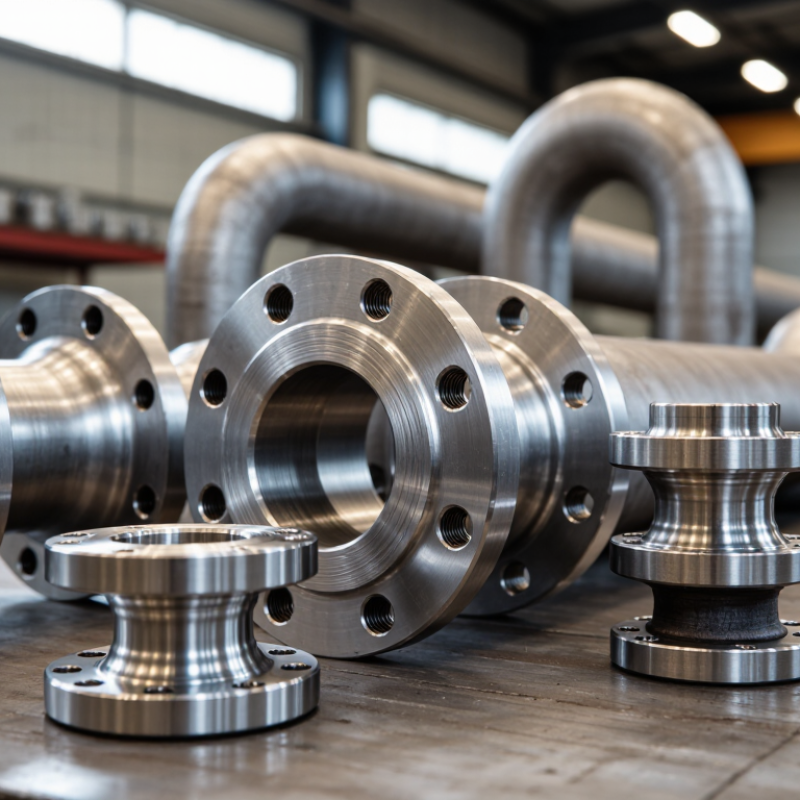
Choosing the right Carbon Steel Flange is not a catalogue exercise. It is a pressure-boundary decision.
The World Steel Association reported approximately 1.89 billion tonnes of crude steel production worldwide in 2023. That scale supports broad material availability, but it does not guarantee correct flange selection. ASME B16.5 defines important requirements for dimensions, pressure classes, materials, and testing. Yet field conditions often expose weaknesses that datasheets hide. Temperature cycling, corrosive condensate, vibration, and uneven bolt tightening can change performance quickly.
“The purpose of a bolted joint is to clamp two or more parts together,” explains Dr. John H. Bickford, a recognized authority on bolted-joint design. His statement applies directly to flanged connections. A strong flange still depends on gasket seating, bolt preload, pipe alignment, and installation discipline. Small details matter. A raised-face flange may look suitable, but its gasket type and surface finish must match the service. A higher pressure class may add safety, but it can also increase cost, weight, and installation difficulty.
This guide presents seven practical tips for choosing the right Carbon Steel Flange. It considers pressure, temperature, connection type, corrosion exposure, dimensions, standards, and supplier quality. The approach reflects common engineering practice and lessons from real maintenance work. One limitation remains: no general guide can replace a project-specific calculation. That is worth remembering. Check the line specification, verify certificates, and question assumptions before ordering. A flange that fits the pipe may still fail the system.
7 Tips for Choosing the Right Carbon Steel Flange
Carbon steel flanges differ by connection, pressure rating, and service environment. Weld-neck flanges suit high-pressure pipelines because their tapered hub reduces stress concentration. Slip-on flanges install faster, but their fit depends heavily on weld quality. Blind flanges close vessel nozzles, maintenance lines, and unused branches. Threaded flanges can help where welding is difficult, although vibration may make them a poor choice.
ASME B16.5 defines flange dimensions, pressure classes, materials, and facing requirements for common pipe sizes. That standard matters more than a supplier’s attractive catalogue description. The International Energy Agency reported that global oil demand reached about 102 million barrels per day in 2023, while the World Steel Association recorded 1.89 billion tonnes of crude steel production. These figures show why carbon steel remains common in energy and industrial infrastructure. They do not prove suitability for every application.
Water treatment often uses raised-face flanges for accessible bolting and routine inspection. Process plants may require corrosion allowances, impact testing, or low-temperature grades. Check fluid chemistry, operating temperature, pressure cycles, pipe schedule, and gasket compatibility. Small details matter. I have seen projects specify Class 150 by habit, then discover serious surge conditions during commissioning. That assumption deserves a second review. Coating can slow external corrosion, but it cannot repair incorrect material selection, poor alignment, or uneven bolt tightening.
| No. | Selection Tip | Flange Type or Specification | Typical Applications | Important Data to Confirm | Practical Recommendation |
|---|---|---|---|---|---|
| 1 | Match the flange to the pipe connection method. | Weld Neck, Slip-On, Socket Weld, Threaded, or Lap Joint | Weld Neck flanges suit critical or cyclic-duty piping. Slip-On flanges are common in general utility and process lines. Socket Weld flanges are often used on smaller-bore systems. | Pipe outside diameter, nominal pipe size, wall thickness, connection method, and welding requirements | Select a Weld Neck flange when fatigue resistance and a smooth load transition are more important than installation simplicity. |
| 2 | Choose the correct pressure-temperature rating. | ASME B16.5 pressure classes commonly include Class 150, 300, 600, 900, 1500, and 2500 | Low-pressure water services may use lower classes, while high-pressure oil, gas, power, and chemical services may require higher classes. | Design pressure, design temperature, fluid condition, flange material, and the applicable pressure-temperature rating table | Never select a class from pressure alone; temperature can reduce the allowable working pressure of carbon steel. |
| 3 | Verify the material grade and operating temperature. | ASTM A105 for common forged carbon steel components; ASTM A350 LF2 for specified low-temperature service | A105 is widely used in standard process and utility piping. LF2 is selected when impact toughness at low temperature is required. | Minimum design temperature, impact-test requirements, chemical compatibility, hardness limits, and material certificates | Use a low-temperature-rated material when the system may experience cold start-up, outdoor exposure, or refrigerated service. |
| 4 | Select the appropriate flange face. | Raised Face (RF), Flat Face (FF), or Ring-Type Joint (RTJ) | RF is widely used for process piping. FF may be specified for compatible low-pressure equipment. RTJ is used for demanding high-pressure or high-temperature services. | Gasket type, gasket material, bolt load, mating flange face, leakage requirements, and maintenance conditions | Ensure both mating flanges use compatible facing and gasket dimensions; do not mix face types without engineering approval. |
| 5 | Confirm the dimensional standard and drilling pattern. | ASME B16.5 for many standard pipe flanges and flanged fittings; ASME B16.47 for larger nominal pipe sizes | Refineries, chemical plants, water systems, power facilities, and pipeline installations use standardized dimensions to support interchangeability. | Nominal size, flange outside diameter, bolt-circle diameter, bolt-hole number, bolt-hole diameter, and flange thickness | Check the standard, pressure class, facing, and nominal bore together; similar-looking flanges may not be interchangeable. |
| 6 | Assess corrosion protection and service environment. | Plain carbon steel, painted or coated carbon steel, and galvanized carbon steel where permitted | Carbon steel is common for dry gas, oil, steam, compressed air, and general industrial water systems, subject to corrosion control. | Fluid chemistry, water content, chlorides, external humidity, soil exposure, coating system, and corrosion allowance | Carbon steel is not inherently corrosion-proof; use suitable coatings, lining, inhibitors, drainage, or an alternative material when required. |
| 7 | Review inspection, testing, and installation requirements. | Forged flange with material certification, dimensional inspection, visual inspection, and additional examination when specified | Critical piping, pressure vessels, utility networks, and maintenance replacement projects where traceability and leak prevention are important | Certificate requirements, heat number traceability, NDE requirements, bolt material, gasket specification, torque procedure, and pressure testing | Use controlled bolt tightening and clean, undamaged gasket seating surfaces to reduce the risk of leakage during operation. |

When selecting a carbon steel flange, match its pressure rating to the system’s real operating conditions. Pressure alone is not enough. Confirm the maximum pressure, design temperature, fluid type, and expected temperature changes. A flange rated for moderate service may lose allowable pressure at higher temperatures.
Class ratings must be checked against the applicable pressure-temperature table. Do not compare a Class 300 flange with a PN-rated flange by number alone. Their rating systems differ. Review the relevant piping standard, material grade, flange dimensions, and bolt requirements together. Gasket selection also matters, because a strong flange can still leak with an unsuitable gasket or poor surface finish.
Field inspections often find ratings chosen from normal pressure instead of design pressure. That shortcut creates risk. Consider startup, shutdown, surges, and low-temperature conditions. Carbon steel can become less forgiving in cold environments. I have also seen temperature data copied from old drawings, which looked acceptable but no longer matched the process. Verify current records. Ask an engineer to review unusual cycles, vacuum service, corrosion allowance, and thermal expansion before ordering. A small mismatch today can become a costly leak tomorrow.
This chart shows representative pressure-temperature ratings for ASTM A105 carbon steel Class 150 flanges based on ASME B16.5 rating data. As operating temperature rises, the allowable pressure decreases. Select a flange class whose pressure rating remains above the system design pressure at the actual operating temperature, and verify the applicable material, size, gasket, bolting, and code requirements before installation.
Choosing a carbon steel flange begins with accurate pipe measurements. Measure the outside diameter, wall thickness, and actual bore. A nominal pipe size alone can mislead you. The flange bore should match the pipe without creating a sharp internal step. Small errors matter.
Confirm the working pressure and temperature before selecting thickness. A thin flange may suit low-pressure water service but fail under thermal cycling. Check the pressure class, bolt-hole spacing, outside diameter, and raised-face dimensions together. Standards such as ASME B16.5, EN 1092-1, and JIS B2220 use different dimensions. Never mix them casually. The bolt pattern may look similar, but alignment can still fail. I once saw a flange fit the pipe while its bolts missed the mating holes. It looked correct. It was not.
Connection type also affects performance. Choose weld neck flanges for demanding systems and slip-on types where installation speed matters. Threaded connections may suit specific low-risk applications, but verify vibration and temperature limits. Match the facing style and gasket to the service fluid. Ask for material certificates, heat numbers, and dimensional inspection records. These documents support traceability and reduce uncertainty. Leave suitable corrosion allowance when the environment requires it. This detail is often overlooked. Recheck everything before ordering, especially thickness, standard, and facing. A careful second review can prevent expensive site modifications.
7 Tips for Choosing the Right Carbon Steel Flange
Evaluate Material Grades, Corrosion Resistance, and Durability
Choosing a carbon steel flange begins with the service conditions, not the catalog photograph. ASTM A105 is widely used for forged flanges in ordinary pressure systems. For low-temperature service, ASTM A350 LF2 may offer better impact toughness. Higher-strength grades can support demanding applications, but strength alone does not guarantee reliability. ASME B16.5 dimensions must also match the pressure class, temperature, and connected pipe.
Carbon steel is not naturally corrosion-resistant. Moisture, chlorides, acidic fluids, and stagnant water can attack exposed surfaces quickly. The AMPP IMPACT study estimated global corrosion costs at about 2.5 trillion US dollars annually, equal to roughly 3.4% of global GDP. That figure makes surface protection more than a cosmetic choice. Evaluate coating systems, drainage, isolation washers, and inspection access. ISO 9223 atmospheric corrosivity categories can help compare environmental severity, although they cannot replace site testing.
Durability depends on more than the flange grade. Repeated thermal cycling, vibration, bolt preload, gasket compression, and misalignment can create leakage paths. I have seen a correctly rated flange fail after poor installation. That detail is easy to underestimate. Check mill certificates, heat treatment records, dimensional tolerances, and impact-test requirements. Do not assume a thicker flange is automatically safer. It may add stiffness while hiding an unsuitable material, weak corrosion control, or incorrect bolting. A documented inspection plan remains essential.
7 Tips for Choosing the Right Carbon Steel Flange
Quality certificates need more than a logo or scanned document. Ask for the material grade, heat number, chemical analysis, tensile results, and inspection date. EN 10204 Type 3.1 documentation supports traceability from the mill to the delivered flange. Verify the certificate with the issuing laboratory when possible. ISO’s Survey 2022 recorded more than 1.26 million ISO 9001 certificates worldwide, but registration alone does not prove product quality. A certificate can be real and still be irrelevant.
Compatibility must match the piping system, not just the nominal diameter. Check flange type, facing, bolt pattern, pressure class, temperature range, gasket material, and corrosion conditions. ASME B16.5 provides dimensional and pressure-temperature requirements for many flanges, while ASTM material specifications help confirm grade performance. Compare the flange certificate with the design drawing and piping specification. Small mismatches matter. A raised face paired with the wrong gasket can create leakage after installation.
Supplier reliability appears in records, not promises. Request recent inspection reports, nonconformance history, production capacity, and delivery performance. Ask whether critical dimensions receive independent inspection. The World Steel Association reported 1.89 billion tonnes of crude steel production in 2023, yet high volume does not guarantee consistent flange quality. During supplier reviews, inspect packaging, marking, rust protection, and heat-number transfer. One weak point remains easy to miss: documents may be complete while actual traceability is broken. Recheck samples before approval.