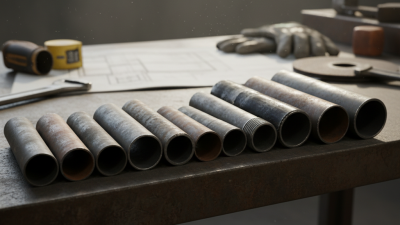
Top Types of Carbon Steel Pipe for Global Buyers?
Global buyers do not choose Carbon Steel Pipe by price alone. They match grade, manufacturing route, dimensions, and testing to the job. A pipeline crossing dry, open ground has different demands from a steam line beside a boiler. Small details matter: wall thickness, weld quality, and the mill test certificate can change the decision.
The World Steel Association’s October 2024 Short Range Outlook forecast global steel demand at 1.75 billion tonnes in 2024 and 1.77 billion tonnes in 2025. These figures describe steel overall, not pipe consumption, so they should not be mistaken for a pipe-market forecast. Worldsteel Director General Edwin Basson’s commentary highlights that steel demand recovers unevenly across regions. That is a useful reminder for buyers: local infrastructure plans can matter more than a global headline.
Standards help make comparisons clearer. API Specification 5L covers line pipe, while ASTM A53 and ASTM A106 address other common pipe applications. They are not interchangeable labels. Buyers still need to check grade, size, end finish, inspection scope, and documentation against the actual service conditions. And, honestly, a certificate alone does not remove every risk; supplier verification and clear purchase specifications matter too.
This guide introduces the main Carbon Steel Pipe types global buyers encounter, including seamless and welded options. It focuses on practical distinctions, not a single “best” choice. The right pipe depends on the service, the specification, and the evidence behind the supplier’s claims.
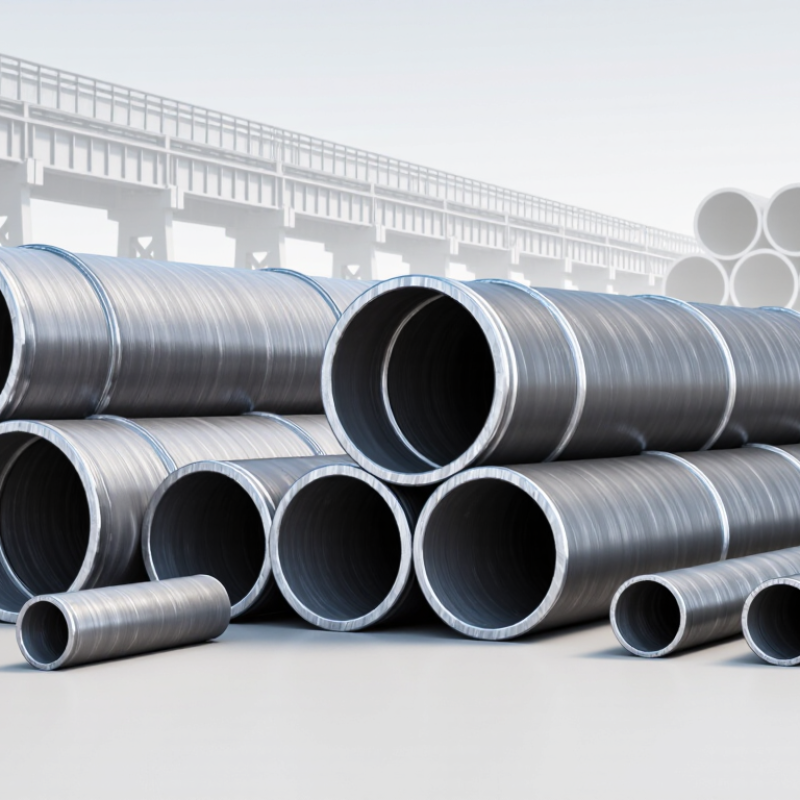
Carbon Steel Pipe Basics and Classification Criteria
Carbon steel pipe is made mainly from iron and carbon, with small amounts of other elements. Its properties depend on composition, manufacturing route, and heat treatment. More carbon can increase strength and hardness, but may reduce weldability and ductility. The trade-off matters. A pipe used for a low-pressure water line may need different properties from one carrying hot process fluid.
Classification starts with how the pipe is made. Seamless pipe is formed without a welded joint; welded pipe is made from steel plate or strip joined along a seam. Neither category is automatically best for every job. Buyers should also check dimensions, including outside diameter and wall thickness, because these affect fit and pressure capacity. Grade and applicable specifications help define chemical composition, mechanical properties, and testing requirements. Details matter.
Service conditions guide selection. Consider operating pressure, temperature, corrosion exposure, and whether the pipe will be welded or machined on site. A thick wall may provide more capacity, yet add weight and installation cost. Ask for traceable test documentation and confirm that its stated specification matches the project requirement. In practice, paperwork can look complete while a small dimensional detail is overlooked. Verify it against the drawings.
Seamless Carbon Steel Pipe: Structure, Uses, and Key Benefits
Seamless carbon steel pipe is made by piercing a heated solid billet, then rolling and sizing it into a hollow section. It has no longitudinal weld seam, which can simplify inspection where a continuous pipe wall is required. The surface may show rolling marks, and dimensions can vary within specified tolerances.
Seamless does not mean defect-free.
Buyers use these pipes in oil and gas systems, power plants, refineries, and industrial process lines. Typical duties include transporting water, steam, and hydrocarbons under pressure. The suitable grade and wall thickness depend on operating pressure, temperature, fluid properties, and design requirements.
A pipe chosen only by outside diameter can be the wrong choice.
One practical benefit is the absence of a welded seam, especially in applications where welding quality and inspection are major concerns. But seamless pipe can cost more and may have size limits compared with welded alternatives. Check the applicable material specification, test records, dimensions, and heat number before accepting a shipment.
Small paperwork gaps matter.
Storage matters, too: keep pipe ends protected and avoid prolonged contact with standing water, which can encourage surface rust. A detail often missed is installation fit; even compliant pipe can create delays if its wall thickness or end preparation does not match the project.
Welded Carbon Steel Pipe: Main Processes and Applications
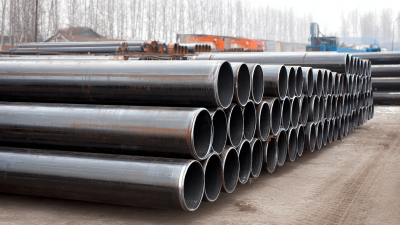
Welded carbon steel pipe is made by shaping steel plate or coil into a tube and joining the seam. The main processes are electric resistance welding (ERW), longitudinal submerged arc welding (LSAW), and spiral submerged arc welding (SSAW). ERW forms a straight seam using heat and pressure, making it suitable for many moderate-diameter lines. LSAW uses a straight plate and submerged arc welding, often for large-diameter pipe and demanding service. SSAW forms a helical seam from steel coil, allowing flexible diameter and length options. Details matter.
Process choice affects inspection, dimensions, and cost. Buyers should check wall thickness, steel grade, weld examination, and the intended operating conditions. In practice, a pipe’s paperwork is only useful when it matches the markings and test records supplied with the shipment. That sounds basic, but it is easy to overlook when comparing quotations.
These pipes serve water distribution, structural supports, piling, and oil or gas transmission, depending on specification and project requirements. A large-diameter SSAW pipe may suit a water main, while ERW pipe is common in building frameworks and utility lines. For pressure service, confirm the applicable design specification and required testing with a qualified engineer. Welded pipe is not automatically the cheaper or weaker choice; suitability depends on production controls and application. Even careful selection has limits. Conditions in the field can differ from the design assumptions.
Welded Carbon Steel Pipe: Main Processes and Typical Diameter Ranges
ERW (electric resistance welded) pipe is commonly used for water, gas, and structural applications. Longitudinal SAW (submerged arc welded) pipe is used in large-diameter pipelines and heavy-duty applications. Spiral SAW pipe is also used for large-diameter water and transmission lines. Diameter ranges shown are indicative industry ranges; actual production capability depends on the mill, wall thickness, grade, and applicable specification.
Carbon Steel Pipe Grades, Sizes, and Performance Standards
Carbon steel pipe selection starts with grade, size, and service conditions—not the label alone. ASTM A106 Grade B is commonly specified for seamless pipe in elevated-temperature service, while ASTM A53 covers several general-purpose applications. For line pipe, API 5L grades such as X42 or X52 indicate specified strength levels. These standards are not interchangeable. Check the project specification, current standard edition, and required manufacturing route before ordering. Small detail, big consequence.
Pipe size needs equal care.
Nominal pipe size does not directly state the outside diameter, and wall thickness may be specified by schedule or measured directly. A 4-inch pipe with Schedule 40 wall is not the same as one with a heavier wall. That difference affects weight, pressure capacity, and fit-up. Ask suppliers to confirm outside diameter, wall thickness, length tolerance, and end finish on the inspection documents. Look closely.
Performance depends on more than grade. Pressure, temperature, corrosion exposure, welding needs, and loading all shape the choice. For example, a pipe carrying hot process fluid may need a different specification from a low-pressure water line, even at the same diameter. Verify mechanical properties, chemical limits, and applicable testing requirements in the governing standard. Field conditions can be messy. A technically compliant grade may still be a poor fit if the operating data are incomplete, so leave room for engineering review before purchase.
How Global Buyers Select the Right Carbon Steel Pipe Type
Global buyers should select carbon steel pipe by service conditions, not by price or trade name. Start with the fluid, design pressure, temperature, and installation environment. Seamless pipe is often considered for demanding pressure service, while welded pipe can suit many large-diameter lines. Neither choice is automatically safer. The correct option depends on the applicable specification, manufacturing controls, and inspection records. Details matter.
World Steel Association reported global crude steel production of 1,892.2 million tonnes in 2023. This scale supports broad material availability, but it does not guarantee that a specific pipe grade is suitable. For pipeline applications, buyers commonly review API Specification 5L requirements, including grade, dimensions, and testing. For structural or general-purpose uses, other standards may apply. Confirm the standard against the project design and local engineering requirements.
Before ordering, compare outside diameter, wall thickness, grade, end finish, and required certificates. A pipe exposed to wet soil or salt spray may need a corrosion-control plan; carbon steel alone does not resist corrosion indefinitely. Ask suppliers for traceability documents and inspection results, then verify them against the purchase specification. I have seen small mismatches in wall thickness complicate installation. They are easy to overlook, and worth checking.